If you have ever typed “how to learn digital marketing” into Google at 11 PM, feeling excited and completely lost at the same time, welcome, you are exactly where I was two years ago. This digital marketing roadmap for beginners is the master guide that ties together everything on Marketing With Aravind, from digital marketing basics for beginners to advanced channels like SEO, content, social media, and PPC. Think of this as your home base, the one page you bookmark and come back to every week as you grow from “total beginner” to “job-ready marketer.”
Most guides online do one of two things badly. They either dump fifty topics on you with zero order, or they oversimplify things into vague motivational fluff. Neither actually gets you hired or gets your first client. So in this guide, we are doing something different: a real digital marketing roadmap, with a timeline, free resources, practical projects, and a printable checklist you can follow from Day 1 to Day 90 and beyond.
What Is a Digital Marketing Roadmap?
A digital marketing roadmap is a structured, step-by-step learning path that tells you exactly what to learn, in what order, and what to practice at every stage, instead of randomly watching YouTube videos about SEO on Monday and Instagram Reels on Tuesday with no connection between them.
A good digital marketing learning roadmap does three things a random collection of tutorials never does:
- It sequences topics logically, so each new skill builds on the last one.
- It attaches a timeline (weekly or monthly) so you always know if you’re on track.
- It pairs every learning module with a real project, so you build a portfolio while you learn.
That is exactly the structure this roadmap follows.
Digital Marketing Roadmap for
Beginners – Free eBook
Download the beginner-friendly eBook and start learning SEO, PPC, content marketing, AI tools, WordPress, and more
Why Beginners Need a Roadmap (Not Just a Topic List)
Here’s the problem with most “digital marketing skills to learn” lists: they read like a grocery list. SEO, content marketing, PPC, email marketing, analytics, check, check, check. But knowing a list of ingredients doesn’t mean you can cook a meal.
A beginner’s digital marketing guide should answer three practical questions:
- What do I learn first, and why?
- How long will each stage realistically take?
- What do I actually build to prove I know it?
This roadmap answers all three, using the same order I recommend to every student, freelancer, and small business owner who messages me asking, “Aravind, where do I even start?”
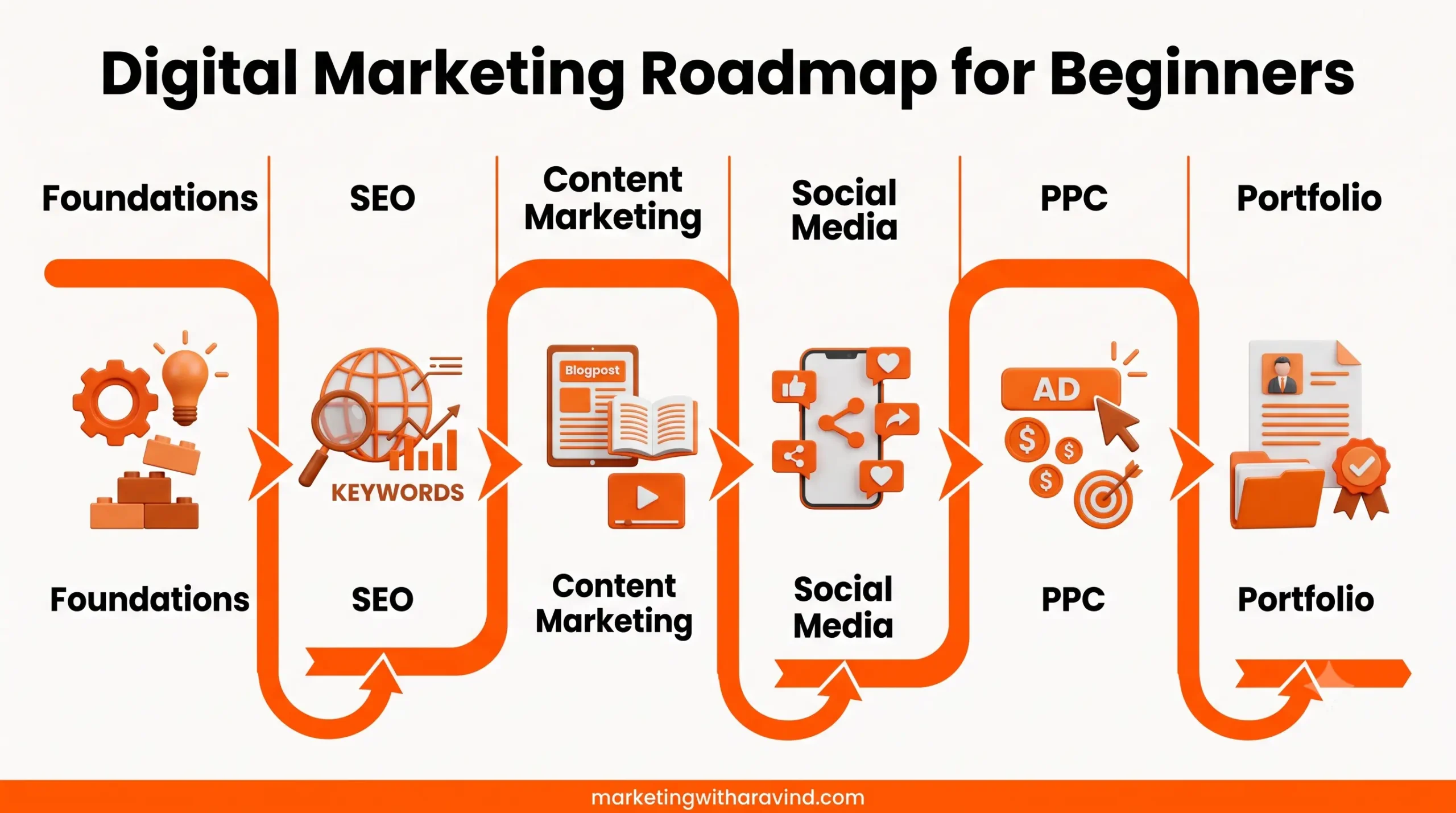
The Digital Marketing Roadmap: Visual Overview
Before diving into each stage, here’s the big picture. Save or screenshot this, it’s the entire journey in one glance.
(Insert Roadmap Infographic Here — see Image Placement Guide below)
Stage 1: Digital Marketing Foundations (Week 1–2)
Stage 2: SEO Foundations (Week 3–5)
Stage 3: Content Marketing & Blogging (Week 6–7)
Stage 4: Social Media Marketing (Week 8–9)
Stage 5: PPC & Google Ads (Week 10–11)
Stage 6: Analytics, Strategy & Portfolio (Week 12)
Now let’s break down each stage properly.
Stage 1: Build Your Digital Marketing Foundations (Days 1–15)
- Read what is digital marketing to understand the core definition and why it matters more than traditional marketing today.
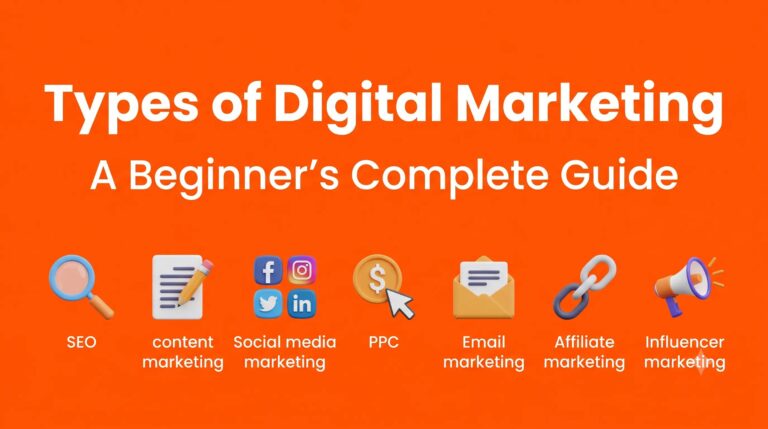
- Move on to types of digital marketing to learn how SEO, content, social media, PPC, and email marketing fit together as one ecosystem.
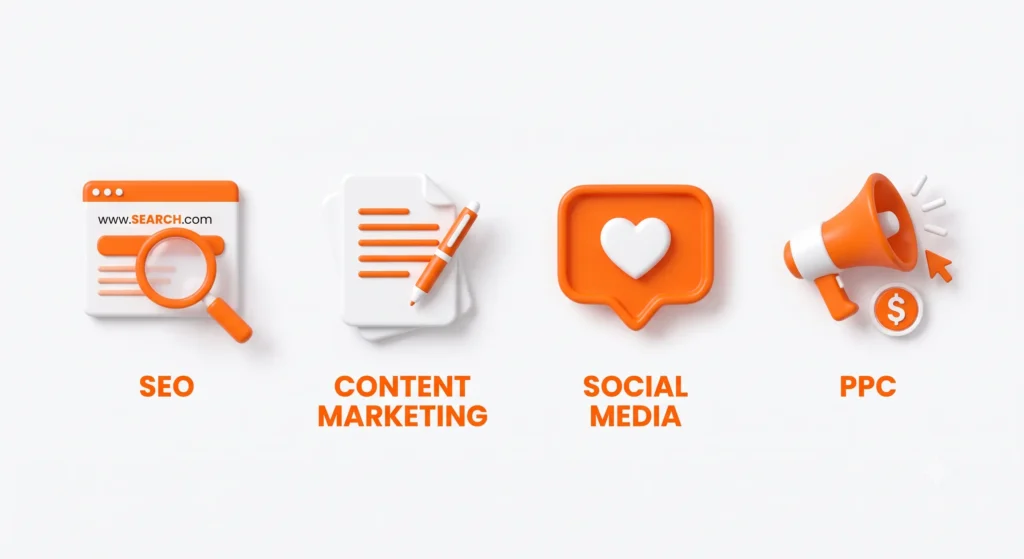
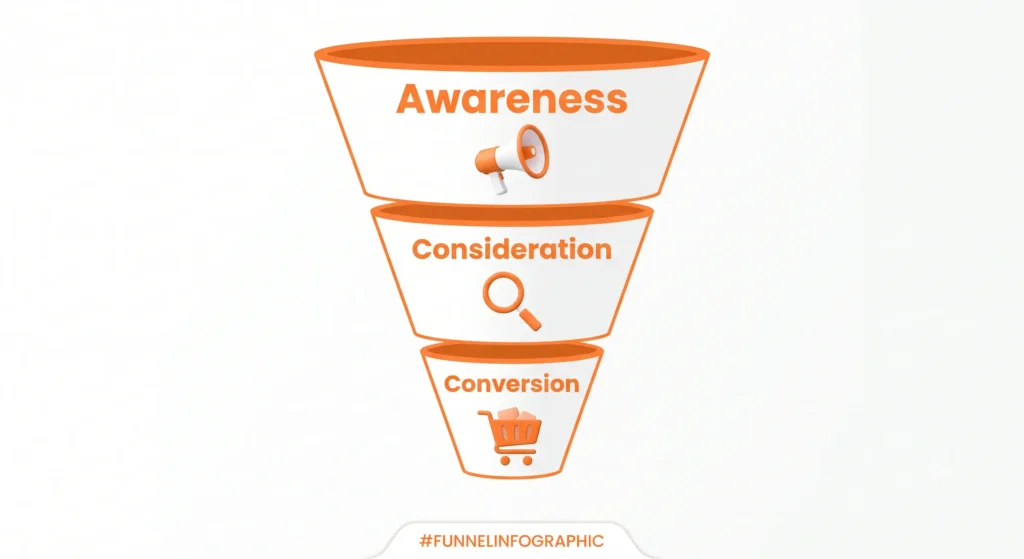
- Finish with digital marketing basics for beginners, which connects all four pillars. content marketing, SEO, social media, and PPC into a single marketing funnel.
Before touching any tool, you need the big-picture map of the industry. Start here:
Free resources for this stage: Google’s Fundamentals of Digital Marketing course, HubSpot Academy’s free certifications, and YouTube channels that explain marketing funnels visually.
Practical project: Write a one-page summary (in your own words) explaining the digital marketing funnel, awareness, consideration, and conversion using a real brand example like Zomato or Swiggy.
Stage 2: Learn SEO Foundations (Days 16–35)
SEO is the backbone of every long-term digital marketing career, which is why it comes right after the basics. This is also where most beginners quit too early because they skip the fundamentals and jump straight to “SEO tricks.” Don’t do that.
- Start with SEO foundations for beginners to understand what SEO actually is and why Google ranks some pages above others.
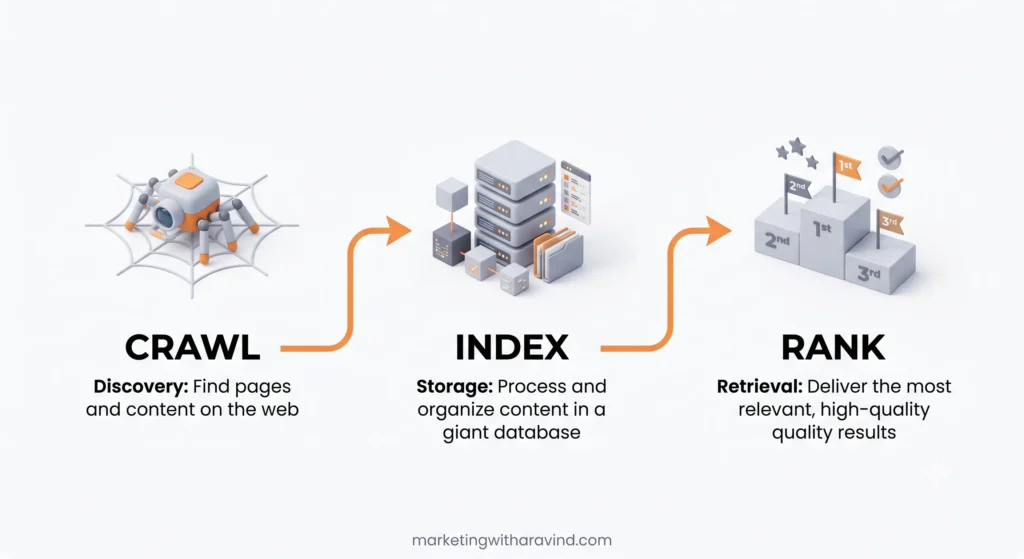
- Learn how search engines work, crawling, indexing, and ranking. So SEO stops feeling like magic.
- Study the types of SEO: on-page, off-page, and technical SEO.
- Go deeper into on-page SEO basics, covering title tags, meta descriptions, headers, and keyword placement.
- Finally, explore SEO tools for beginners like Google Search Console, Google Keyword Planner, and free keyword research tools.
Free tools: Google Search Console, Google Analytics, Google Keyword Planner, Ubersuggest (free tier).
Practical project: Pick any topic you’re passionate about and do keyword research for 10 keywords using Google Keyword Planner. Write down search volume and competition for each.
Stage 3: Master Content Marketing & Blogging (Days 36–49)
Once you understand SEO, content marketing becomes ten times easier, because content is what SEO ranks. This stage is where you start actually creating things.
- Begin with what content marketing is to learn the difference between content marketing and just “posting content.”
- Understand the importance of content marketing for building trust and long-term traffic.
- Follow the full content marketing for beginners guide to learn the content marketing funnel and distribution cycle.
- Explore content marketing tools for planning, writing, and repurposing content, including AI tools like ChatGPT and design tools like Canva.
- Finish with blogging for beginners, a complete 8-step roadmap to starting and growing a blog, the exact process I used to build this website.
Practical project: Start a free blog (WordPress.com or Medium) and publish one 800-word article on a topic you understand well. This becomes your first portfolio piece.
Stage 4: Learn Social Media Marketing (Days 50–63)
Social media marketing is where most beginners feel most comfortable, since everyone already uses these platforms, the trick is learning to use them strategically instead of casually.
- Start with what is social media marketing to learn the difference between organic and paid social.
- Read the social media marketing for beginners complete guide for an 8-step strategy roadmap and the 3-2-1 content formula.
- Learn how to choose the best social media platforms for business based on your niche and audience.
- Go deep into Instagram marketing for beginners, including feed posts, Reels, Stories, and a 30-day posting plan.
- Explore social media marketing tools for scheduling, design, and analytics.
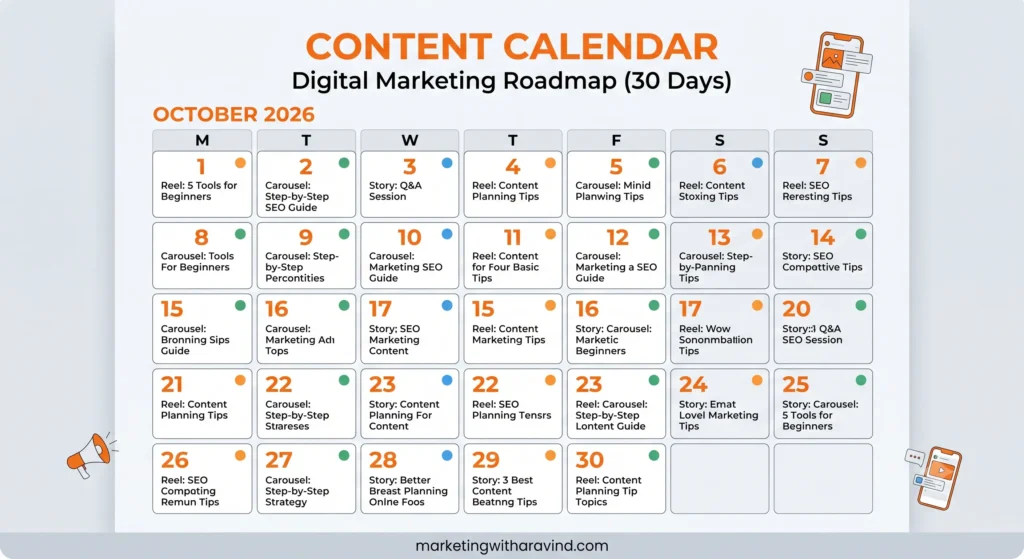
Practical project: Create a 7-day content calendar for a fictional or real small business Instagram page, mixing feed posts, Reels, and Stories.
Stage 5: Understand PPC and Google Ads (Days 64–77)
Paid advertising is often the last stage beginners tackle, because it requires the SEO and content foundation to actually write good ad copy and landing pages.
- Start with what is PPC marketing: a beginner’s guide to understand pay-per-click basics.
- Follow the complete PPC for beginners guide, covering the ad auction process and core PPC metrics.
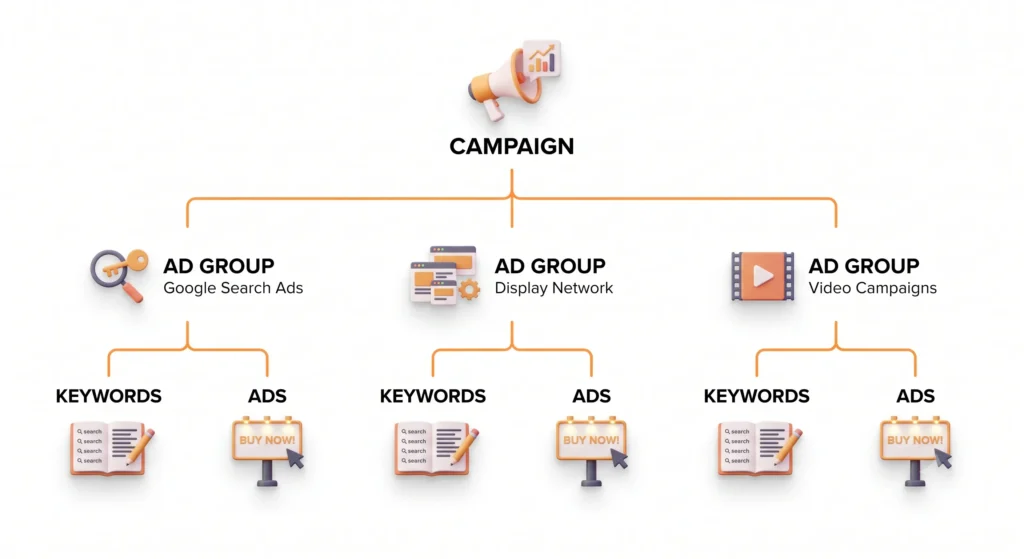
- Learn Google Ads basics, including campaign types and how the Google Ads platform works.
- Study Google Ads keyword match types to control exactly who sees your ads.
- Compare search ads vs display ads to know which format fits which campaign goal.
Practical project: Set up a free Google Ads account (no payment required for practice) and build one mock search campaign with five keywords and two ad variations.
Stage 6: Bring It All Together, Choose Your Path
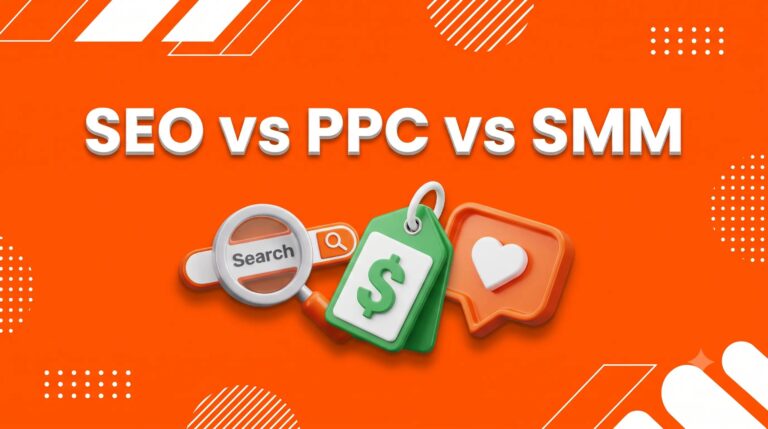
By this stage, you understand SEO, content, social media, and PPC individually. Now it’s time to decide where to specialize. Read SEO vs PPC vs SMM to compare speed, cost, and longevity across all three channels, and decide which one fits your goals, freelancing, a job, or growing your own business.
Who Is This Digital Marketing Roadmap For?
This roadmap for beginners works whether you’re a college student exploring careers, a freelancer trying to add a high-income skill, a small business owner who wants to market their own store without hiring an agency, or someone switching careers entirely. The order doesn’t change; only the depth does. A student might spend extra weeks on each stage to build a strong foundation, while a small business owner might move faster through PPC because they already understand their product and audience.
If you’re a student, treat this as a six-month plan instead of ninety days, and focus heavily on Google’s free certifications, since they carry real weight on a resume even without prior work experience.
If you’re a freelancer, prioritize the portfolio projects in each stage over certificates, clients care far more about what you can show than what you can claim.
If you’re a small business owner, you can skip ahead slightly to the content marketing and social media stages first, since those channels give you the fastest visible results for your own business, then circle back to SEO and PPC once you’re comfortable posting consistently.
Digital Marketing Certifications Worth Adding to This Roadmap
While this roadmap is built around free, hands-on learning, pairing it with a recognized certification adds credibility, especially if you’re applying for jobs or pitching freelance clients. Google offers several free certifications that map directly onto the stages above.
A fundamentals certification for Stage 1
A Google Ads certification for Stage 5
And an analytics certification once you reach Stage 6
None of these replace practical projects, but they’re a useful addition once you’ve already built real work to back them up.
Using AI Tools Inside Your Digital Marketing Roadmap
One thing most older roadmaps miss entirely is AI. Tools like ChatGPT can speed up almost every stage of this journey, from brainstorming blog topics and writing first-draft outlines, to generating ad copy variations for PPC campaigns, to suggesting Instagram caption ideas during Stage 4. The rule I give every beginner: use AI tools to speed up production, never to skip understanding. If you can’t explain why an AI-generated headline works, you’re not ready to publish it. Treat ChatGPT the same way you’d treat Canva. A tool that makes a skilled marketer faster, not a replacement for learning the skill itself.
From Learning to Earning: Freelancing After This Roadmap
Once you’ve completed all six stages and built a small portfolio, the natural next step for many beginners is freelancing. Platforms make this accessible even without formal experience, as long as you can show real project work, the blog post you published in Stage 3, the mock ad campaign from Stage 5, and the final strategy case study all become proof of skill. Start by offering one specific service (like on-page SEO audits or Instagram content calendars) rather than “digital marketing services” broadly. Beginners who specialize narrowly get hired faster than beginners who claim to do everything.
The 30-60-90 Day Digital Marketing Learning Plan
| Timeline | Focus Area | What You Should Achieve |
| Days 1–30 | Foundations + SEO | Understand the marketing funnel, complete SEO foundations, and finish a 10-keyword research project |
| Days 31–60 | Content + Social Media | Publish your first blog post, build a 7-day social media content calendar |
| Days 61–90 | PPC + Portfolio | Build a mock Google Ads campaign, connect Google Analytics and Search Console, publish 3 portfolio pieces |
Print this table out. Stick it above your desk. Progress beats perfection every single time.
Free Tools You’ll Actually Use at Every Stage
| Stage | Free Tool | What It’s For |
| SEO | Google Search Console | Track how your pages perform in Google Search |
| SEO | Google Keyword Planner | Research keyword search volume |
| Content | Canva | Design blog graphics and social media posts |
| Content | ChatGPT | Brainstorm outlines and beat writer’s block |
| Analytics | Google Analytics | Measure traffic and user behaviour |
| Social Media | Meta Business Suite | Schedule Instagram and Facebook content |
| PPC | Google Ads (demo mode) | Practice campaign building risk-free |
Self-Study vs Paid Course vs Mentorship: Which Path Should You Choose?
| Factor | Self-Study (Free) | Paid Course | 1:1 Mentorship |
| Cost | Free–Low | Moderate | High |
| Speed | Slow, self-paced | Medium, structured | Fast, personalized |
| Accountability | Low unless disciplined | Medium | High |
| Best For | Students, hobbyists | Career switchers | Freelancers building fast |
| Certification | Varies (Google certs are free) | Usually included | Rarely included |
There’s no wrong answer here, many successful marketers, including beginners following this exact roadmap, start with self-study and later invest in a course once they know which specialization excites them most.
Practical Projects to Build a Real Portfolio
Reading is not learning. Doing is learning. After each stage above, complete these portfolio-building projects:
- After the SEO stage: Do on-page SEO audit of one blog post using Rank Math or Yoast (free versions work fine).
- After the content stage: Publish two blog posts, one how-to guide, and one listicle.
- After the social media stage: Design a 9-post Instagram grid mockup in Canva.
- After the PPC stage: Build a one-page mock landing page for a Google Ads campaign.
- Final project: Combine everything into one case study, “How I Would Market [Real Local Business] Using SEO, Content, Social Media, and PPC.”
This final case study is what you show recruiters or clients. It proves you understand strategy, not just definitions.
Digital Marketing Roadmap Checklist
- Understand what digital marketing is and its four core pillars
- Complete SEO foundations and keyword research project
- Learn on-page SEO and audit one real blog post
- Publish your first blog post using content marketing principles
- Build a 7-day social media content calendar
- Learn Instagram marketing and design a sample content grid
- Understand PPC basics and build a mock Google Ads campaign
- Compare SEO vs PPC vs SMM and choose your specialization
- Connect Google Analytics and Google Search Console
- Publish a final strategy case study for your portfolio
Common Mistakes Beginners Make on Their Digital Marketing Journey
- Learning everything at once. Jumping between SEO, PPC, and social media in the same week with no structure leads to shallow knowledge of everything and mastery of nothing.
- Skipping practice. Watching tutorials without building anything means you’ll freeze the moment a real client or interviewer asks you to actually do the work.
- Ignoring analytics. Many beginners never open Google Analytics or Search Console, so they never learn to measure what’s actually working.
- Chasing tools instead of fundamentals. A free tool with strong fundamentals beats an expensive tool used without understanding.
- Not building a portfolio while learning. Certificates matter less than a portfolio that shows real projects and results.
What Makes This Digital Marketing Roadmap Different
Search “digital marketing roadmap” and you’ll find dozens of pages that list topics SEO, content, social media, PPC, without ever explaining the order, the timeline, or what to actually build. That’s the biggest gap in most beginner guides: they tell you what to learn but never how to prove you learned it.
This guide closes that gap in four ways. First, every stage has a clear timeline, so you always know whether you’re behind or on track. Second, every stage pairs directly with a hands-on project, so by the time you finish, you have a small portfolio instead of just a stack of notes. Third, the free resources and tools are matched to each specific stage instead of dumped into one giant, overwhelming list at the end. Fourth, this roadmap connects directly to in-depth guides for every single topic, so you’re never stuck wondering “what does this actually mean in practice.”
How to Stay Consistent While Following This Roadmap
The single biggest reason beginners abandon a digital marketing roadmap for beginners isn’t lack of information, it’s lack of consistency. A few habits make a real difference:
- Time-block your learning. Even 45 minutes a day, done consistently, beats a single 5-hour session once a week.
- Track progress visually. Use the checklist below and physically tick items off, the momentum matters more than it sounds.
- Publish before you feel ready. Your first blog post, first mock ad campaign, and first Instagram calendar will not be perfect, and that’s fine. Portfolios are built by shipping, not waiting.
- Join a community. Whether it’s a Discord server, a LinkedIn group, or comment sections on beginner blogs, being around other learners keeps you accountable when motivation dips.
- Review your 30-60-90 plan weekly. Five minutes every Sunday to check what you completed and what’s next keeps the whole roadmap from feeling overwhelming.
Frequently Asked Questions
What is a digital marketing roadmap?
A digital marketing roadmap is a step-by-step learning path that organizes marketing skills SEO, content, social media, and PPC into a logical sequence with timelines and practical projects, so beginners know exactly what to learn next.
How do beginners learn digital marketing?
Beginners learn best by combining structured learning (like this roadmap) with hands-on practice, starting with foundations, moving into SEO and content, then social media and PPC, while building small projects at every stage.
What should I learn first in digital marketing?
Start with the fundamentals of digital marketing and the four core channels before specializing. Understanding how SEO, content, social media, and PPC work together makes every advanced topic easier to grasp later.
How long does it take to learn digital marketing?
Using a structured 90-day plan like this one, most beginners can understand the fundamentals and build a small portfolio within three months, though true mastery of any single channel (like SEO) can take six months to a year of consistent practice.
Can I learn digital marketing without a degree?
Yes. Digital marketing is one of the most accessible careers because free resources like Google certifications, YouTube, and hands-on blogging or social media practice can build real, demonstrable skills without a formal degree.
Is digital marketing easy to learn?
The basics are beginner-friendly and don’t require technical or design skills to start, but going deep in any one channel, like technical SEO or Google Ads, takes consistent practice over months, not days.
What skills should I learn first?
Focus first on understanding the digital marketing funnel, basic SEO, and content writing, since these three skills form the foundation that every other channel (social media, PPC, email marketing) builds on.
What is the best digital marketing roadmap for beginners?
The best roadmap sequences learning in this order: fundamentals, SEO, content marketing, social media marketing, and PPC, pairing every stage with a real project, exactly like the 90-day plan outlined in this guide.
Final Thoughts: Your Next Step
You now have a complete digital marketing roadmap for beginners, not a random list of topics, but an actual sequence with timelines, free tools, and projects that build a real portfolio. The biggest mistake you can make now is closing this tab and doing nothing with it.
Pick one action today: bookmark this page, screenshot the 30-60-90 day table, and start Stage 1 this week. Come back to this guide as your home base every time you move to the next stage, and explore the linked guides above as your curriculum.
If you found this roadmap useful, subscribe to the Marketing With Aravind newsletter for weekly beginner-friendly digital marketing lessons, or head to the blog to start Stage 1 right now.

2 Comments