Imagine this.
Priya runs a small bakery in Coimbatore. She bakes the most amazing chocolate cakes in the city. But every month, she struggles to get new customers. She puts up a small banner outside her shop. She distributes pamphlets. Nothing seems to work.
One day, her friend suggests, “Why don’t you post your cakes on Instagram?”
Priya thinks, “What difference will a photo make?”
But she tries it anyway. She posts one photo of her freshly baked chocolate cake with the caption: “Made with love, baked fresh every morning. 🍫”
Within 24 hours, 3 new orders. By the end of the week, 12 new customers. Three of them became regulars.
That, my friend, is social media marketing in real life.
No complicated software. No big budget. Just one photo on Instagram — and a business transformed.
In this guide, you’re going to understand exactly what social media marketing is, how it works, which platforms to use, and how you can start as a complete beginner — even with zero experience.
Let’s dive in.
What is Social Media Marketing In Plain, Simple Words
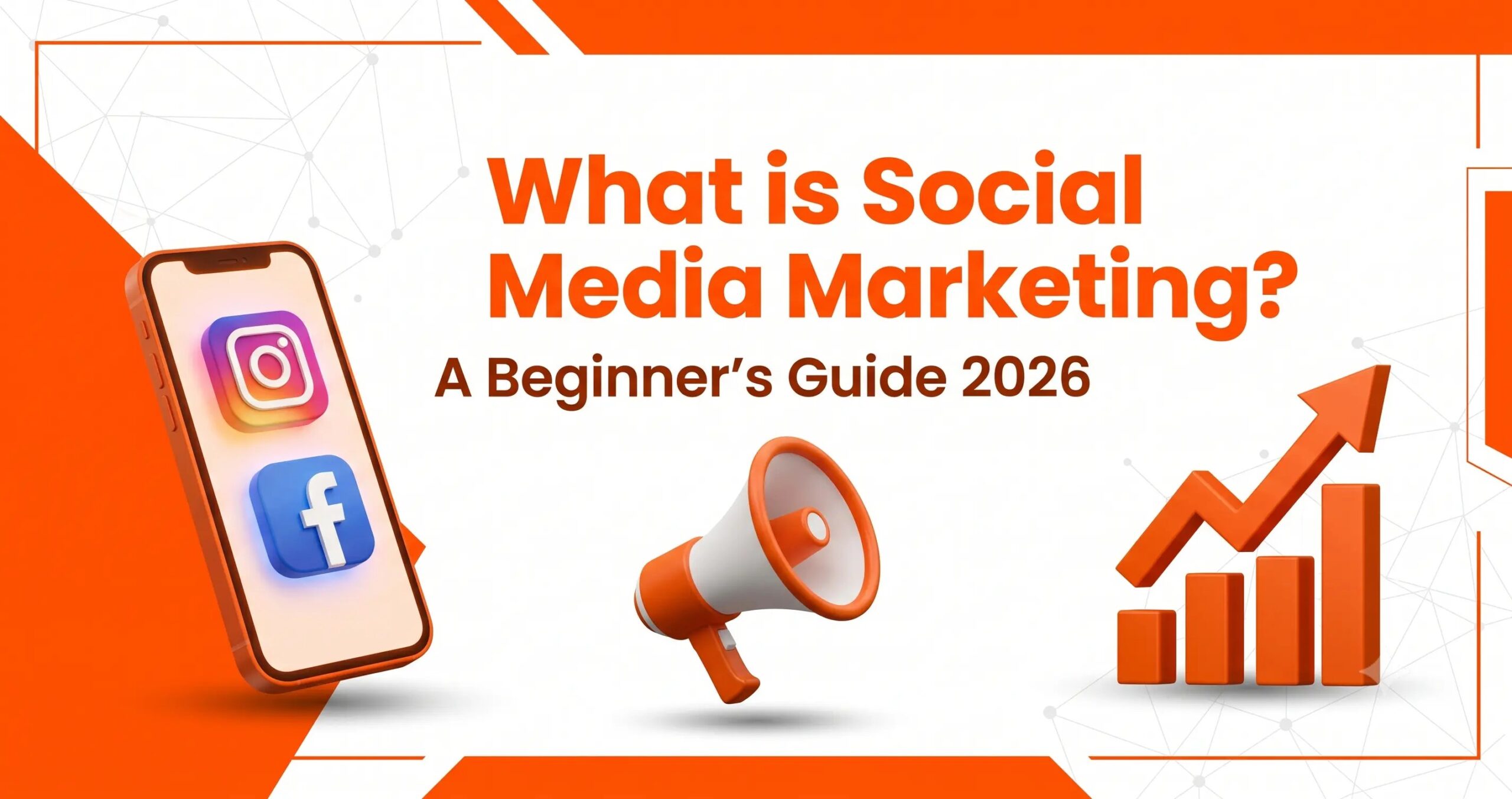
Social media marketing is the process of using social media platforms like Instagram, Facebook, LinkedIn, YouTube, and TikTok to promote your brand, connect with your audience, and grow your business.
In other words, you create content, post it on social media, people see it, engage with it, visit your website, and eventually become customers.
That’s the whole idea. Simple, right?
But there’s more to it than just posting random photos. Social media marketing includes:
- Creating content that your target audience finds useful, entertaining, or inspiring
- Building a community around your brand
- Engaging with your followers through comments and messages
- Running paid ads to reach more people
- Analysing your results and improving over time
It’s one of the most powerful channels in digital marketing today, and the best part? You can start completely free.
The Simple Customer Journey (Real Example)
Here’s how social media marketing actually creates customers — step by step:
- You post a helpful tip on Instagram about how to choose the right running shoes
- Someone sees your post, finds it useful, and follows your account
- They keep seeing your content, trust you more and more
- They click the link in your bio and land on your website
- They subscribe to your email list
- Two weeks later, they buy your product

That entire journey — from Instagram post to purchase — is social media marketing at work.
How Does Social Media Marketing Actually Work?
There are two ways social media marketing works: organic and paid.
Organic Social Media Marketing
Organic means free. You create content — posts, reels, carousels, videos — and publish them without spending money. Your followers see it. If your content is good, people share it, and it reaches even more people.
This is where most beginners start. And it’s a great place to start.
Organic social media builds:
- Brand awareness
- Trust and credibility
- Community around your brand
- Long-term loyal followers
The downside? It takes time. Results don’t come overnight.
Paid Social Media Marketing
Paid means you run ads. Platforms like Meta (Facebook and Instagram) and LinkedIn let you pay to show your content to people who don’t follow you yet.
You can target by age, location, interests, profession — incredibly specific. For example, you could show your bakery ad only to people between 18 and 35 in Coimbatore who are interested in desserts.
Paid social delivers faster results, but it costs money. Even ₹200/day can get you results if your targeting is right.
Organic vs Paid — What’s the Difference?

| Feature | Organic | Paid |
| Cost | Free | Budget required |
| Speed | Slow (weeks/months) | Fast (hours/days) |
| Reach | Limited to followers | As wide as your budget |
| Sustainability | Long-term | Stops when the budget stops |
| Best For | Brand building | Lead generation, sales |
For beginners: Start organic. Learn the basics. Then add paid ads when you’re ready.
The Big Social Media Platforms — Which One Should You Use?
There are dozens of social media platforms. But as a beginner, you don’t need to be everywhere. Here’s a quick overview of the biggest ones:
Instagram is a visual platform — photos, reels, stories, and carousels. It’s perfect for lifestyle brands, food, fashion, fitness, education, and personal branding.
Audience: 18–34 years old, mostly urban, very active in India.
Best for: Brand awareness, community building, audience engagement.
Facebook has over 3 billion users worldwide and is still massive in India, especially in Tier 2 and Tier 3 cities. It’s great for local businesses, groups, and running Meta ads.
Best for: Local businesses, community groups, paid advertising.
LinkedIn is a professional network. It’s where business owners, marketers, job seekers, and professionals hang out. If you’re in B2B, consulting, coaching, or personal branding — LinkedIn is gold.
Best for: B2B marketing, personal branding, thought leadership.
YouTube
YouTube is the world’s second-largest search engine. People go there to learn things. If you create how-to videos, tutorials, or educational content, YouTube is one of the best platforms for long-term organic reach.
Best for: Long-form video content, tutorials, SEO, and driven discovery.
TikTok (and Instagram Reels)
Short-form video is the fastest-growing content format right now. Even if TikTok has restrictions in India, Instagram Reels and YouTube Shorts fill that gap perfectly.

Best for: Reaching younger audiences, viral content, and quick tips.
Quick advice: Pick ONE platform where your target audience lives. Master it. Then expand.
What Are the Real Benefits of Social Media Marketing?
Here’s why businesses — big and small — invest in social media marketing:
1. Build Brand Awareness
Every post you publish is a chance for someone new to discover you. Over time, consistent posting builds recognition. People start saying, “Oh, I’ve seen them on Instagram.”
2. Drive Traffic to Your Website
Every platform allows you to add your website link. Each piece of content you create is an invitation for people to visit your site.
3. Generate Leads and Sales
Social media isn’t just about likes. A well-placed call to action in your caption — “DM us to order” or “Click the link in bio to book a free call” — can directly generate leads and sales.
4. Build Trust Through Social Proof
When people see others engaging with your brand — liking, sharing, commenting — it builds credibility. This is called social proof. And it’s incredibly powerful.
5. It’s Cost-Effective
Compared to traditional advertising like TV, newspapers, or hoardings, social media is extremely affordable. You can start with zero budget and still see real results.
6. You Can Measure Everything
Unlike a newspaper ad, social media gives you exact data. How many people saw your post? How many clicked? How many people visited your site? This data helps you improve over time.
How Businesses Actually Use Social Media Marketing (Real Examples)
Local Business Example (Coimbatore)
A textile shop in Coimbatore starts posting Reels on Instagram, showing new arrivals, styling tips, and behind-the-scenes of their store. They use local hashtags like #CoimbatoreStyle and #CoimbatoreClothing.
Within 3 months, new footfall from people who found them on Instagram. DMs for home delivery requests. Sales up 30%.
Zero ad spend. Just consistent, relevant content.
Online Business / Blogger Example
You start a digital marketing blog (like this one!). Every time you publish a blog post, you share a carousel on Instagram summarising the key points. You post the same tip on LinkedIn. You make a 30-second reel explaining the concept.
Each piece of content drives traffic back to your blog. Your audience grows. Your blog traffic grows. Eventually, you start monetising through ads and affiliate links.
Social Media Marketing vs Other Digital Marketing Channels
| Channel | What it does | Speed | Cost |
| Social Media Marketing | Brand awareness, engagement, traffic | Medium | Free to low |
| SEO | Organic search traffic | Slow (months) | Free to medium |
| Content Marketing | Builds authority, drives traffic | Slow | Free to medium |
| PPC (Google Ads) | Instant paid traffic | Fast | Medium to high |
| Email Marketing | Direct communication with subscribers | Medium | Low |
Social media and SEO work beautifully together. Your social media content drives traffic, which signals to Google that your site is active and trustworthy, which can improve your search rankings over time.
If you want to understand how SEO fits into the bigger picture, read my guide on SEO foundations for beginners.
A Simple Social Media Marketing Strategy for Beginners
You don’t need a 50-page strategy document. You just need to follow these 5 simple steps:
Step 1 — Pick One Platform
Don’t try to be on Instagram, LinkedIn, Facebook, and YouTube all at once. You’ll burn out. Pick one platform where your target audience spends the most time. Start there.
Step 2 — Set Up Your Profile
Your profile is your first impression. Fill it completely:
- Clear profile photo (logo or face)
- Keyword, rich bio (who you help and how)
- Website link
- Contact information
Step 3 — Plan Your Content
Use a simple content calendar. Decide what you’ll post and when. Mix it up:
- Educational posts (teach something useful)
- Engaging posts (ask a question, run a poll)
- Promotional posts (promote your product or blog)
A simple rule: 80% value, 20% promotion.
Step 4 — Post Consistently
Consistency beats perfection every single time. It’s better to post 3 times a week consistently than to post 10 times one week and go silent for a month.
Start with 3 posts per week. Build the habit.
Step 5 — Track and Improve
Every platform gives you free analytics. Check them weekly:
- Which posts got the most engagement?
- At what time did your audience respond best?
- Which content format worked, carousels, reels, or text posts?
Use this data to do more of what works.

Want a deeper dive into building your complete strategy? My social media marketing for beginners guide covers everything step by step.
Social Media Marketing Tools Every Beginner Should Know
You don’t need expensive tools to start. Here are some beginner-friendly options:
| Tool | What it Does | Cost |
| Canva | Create posts, carousels, and banners | Free |
| Buffer | Schedule posts in advance | Free plan available |
| Hootsuite | Schedule + analytics dashboard | Free plan available |
| Meta Business Suite | Manage Facebook + Instagram | Free |
| Google Analytics | Track website traffic from social | Free |
Start with Canva for content creation and Meta Business Suite if you’re on Instagram or Facebook. That’s all you need to begin.
Social Media Marketing Checklist for Beginners
Before you publish your first post, make sure you’ve completed these steps:
✅ Choose one platform to start with
✅ Complete your profile — photo, bio, website link
✅ Decide your content niche (what will you post about?)
✅ Create a simple 1-week content plan
✅ Design 3 posts in Canva using your brand colours
✅ Write captions with a clear call to action
✅ Add relevant hashtags (5–10 per post)
✅ Post at the right time for your audience
✅ Reply to every comment in the first hour
✅ Check your analytics after 7 days and adjust
Frequently Asked Questions About Social Media Marketing
Q1: What is social media marketing in simple words?
Social media marketing is using platforms like Instagram, Facebook, and LinkedIn to promote your brand, connect with your audience, and grow your business — through content, community, and engagement.
Q2: Is social media marketing part of digital marketing?
Yes, absolutely. Social media marketing is one of the key channels within digital marketing. Others include SEO, content marketing, PPC, and email marketing. To see how they all connect, read my digital marketing basics guide.
Q3: How does social media marketing help businesses grow?
It helps businesses build brand awareness, reach new audiences, generate leads, build trust through engagement, and drive traffic to their website — all at a much lower cost than traditional advertising.
Q4: Do I need to spend money on social media marketing?
No. You can start completely free with organic content. Once you understand what works, you can invest a small budget (even ₹200–₹500/day) into paid ads to amplify your reach.
Q5: Which social media platform is best for beginners?
It depends on your audience. If you’re targeting young consumers, start with Instagram. If you’re in B2B or personal branding, start with LinkedIn. Pick the platform where your audience already spends time.
Q6: How long does it take to see results from social media marketing?
Organic results take time — typically 3 to 6 months of consistent posting before you see significant growth. Paid ads can show results within days. Consistency is the key.
Q7: What type of content works best on social media?
Short-form video (Reels) currently gets the most organic reach across almost all platforms. But educational carousels, how-to posts, and storytelling content also perform very well — especially on LinkedIn and Instagram.
Ready to Start Your Social Media Marketing Journey?
Social media marketing doesn’t have to be complicated.
It starts with one post. One platform. One consistent habit.
Remember Priya and her bakery? She didn’t study marketing. She didn’t have a big budget. She just showed up, posted something real, and let her audience find her.
You can do the same — for your business, your brand, or your blog.
The next step? Learn how to build a complete strategy. My social media marketing for beginners guide walks you through everything — platforms, content planning, scheduling, and growing your audience from zero.
And if you want to understand the full picture of digital marketing, check out my digital marketing basics for beginners guide — it covers all 6 channels, including social media, SEO, PPC, and more.
You’ve got this. Start today. Stay consistent. The results will come.
Want to learn more? Follow me on Instagram and LinkedIn for daily digital marketing tips for beginners.