Imagine walking through the bustling streets of Gandhipuram in Coimbatore on a warm weekend evening. You are looking to buy a new smartphone. As you walk past a row of retail electronic shops, a salesman steps directly into your path, thrusts a glossy pamphlet into your face, and starts shouting, “Buy this phone now! Best offer! 10% discount today only!” How do you react? If you are like most people, you will probably feel annoyed, sidestep him, and keep walking. You don’t know this man, you don’t trust his shop, and you hate being aggressively forced to buy something when you are just exploring.
Now, let’s look at a completely different scenario.
A week before going to the market, you open Google or YouTube and search for “Best smartphones under ₹20,000 in India.” You find an incredibly detailed blog post or a clear, friendly YouTube video breakdown by a tech reviewer. They don’t tell you to buy immediately. Instead, they explain the camera quality, battery life, pros, and cons in plain language. They give you massive value for free.
By the end of that video or article, you feel educated, confident, and incredibly grateful to that creator. When they say, “If you want to buy this phone, I’ve left a direct link below,” you gladly click it.
That second scenario is the power of content marketing. It is the art of attracting people by helping them, rather than annoying them with traditional sales pitches. Let’s pull back the curtain and look at how this strategy works, why it is the ultimate way to grow an online business, and how you can start your own journey from scratch.
The Secret Behind the Free Value: Why Do Brands Give Away Free Information?
If you spend even an hour online browsing through LinkedIn, Instagram, or various blogs, you will notice a fascinating trend: thousands of smart companies and creators are constantly giving away their best secrets completely free.
An agency owner shares a complete step-by-step framework on how they ran a successful ad campaign. A local fitness coach in Chennai uploads free daily workout routines on Instagram. Even on my own platform, I share end-to-end insights via my SEO foundations for beginners guide to help new bloggers understand how search engine storage files handle their web pages. Free information acts as the ultimate hook that turns casual internet scrollers into loyal advocates.
This setup often leaves beginners scratching their heads. Why would these people give away their hard-earned knowledge for free? Why not lock it up and charge a fee for it?
The core secret of business is simple: Why companies give away free information and still make money comes down to human psychology.
Before a complete stranger ever pulls out their debit card or opens their UPI app to pay you a single rupee, they need to answer three foundational questions about your brand:
- Do I know who you are?
- Do I trust your expertise?
- Do you actually understand my problems?
When you give away massive, uninhibited value through your content, you are not losing business—you are systematically answering “yes” to all three of these questions. You are building authority.
When your audience consumes your free guides and sees real results, a profound psychological shift occurs. They realize that if your free content is this life-changing, your paid products, consulting, or premium services must be absolutely mind-blowing. Free information acts as the ultimate hook that turns casual internet scrollers into loyal, paying brand advocates.
What is Content Marketing? A Simple Definition
Let’s strip away the heavy corporate textbook talk. If you look up a formal content marketing definition online, you might encounter complex, dry phrases like “strategic marketing approach focused on creating and distributing valuable, relevant, and consistent content.” That sounds like a textbook written by someone who has never run a website.
Let’s use a simple definition of content marketing instead:
Content marketing is a digital strategy where you create helpful, entertaining, or educational material (like articles, videos, or social posts) to naturally attract a specific group of people, win their trust, and eventually turn them into paying customers.
To truly understand the content marketing meaning, you have to look closely at what it is not. It is not cold calling a random list of people during their lunch break. It is not plastering annoying pop-up ads all over a web page. It is not paying for massive, expensive billboards on the side of Avinashi Road that thousands of people drive past without ever glancing at.
Traditional advertising pushes a message out into the world, hoping someone pays attention. Content marketing acts like a high-powered magnet instead. If you want to see the exact structure of this framework in action, reading through our complete master blueprint on content marketing for beginners will show you how to naturally map out your first pieces of educational content to draw people straight to your static pages.
It is the foundation of inbound marketing—the discipline of earning attention organically rather than renting or buying it through aggressive interruption.
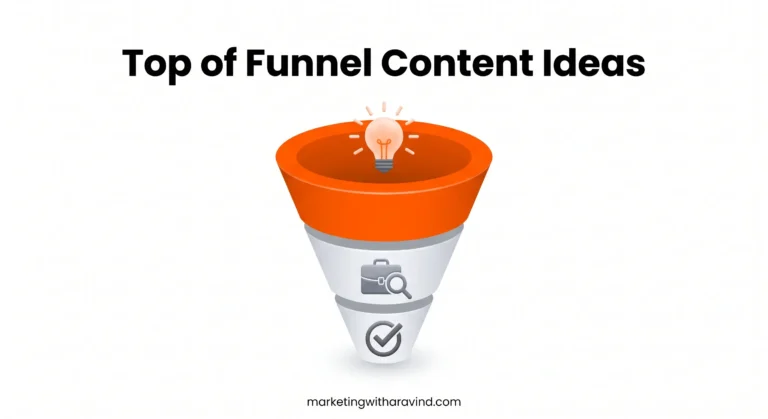
How Content Marketing Works: The Content Marketing Funnel
Content marketing is never a random, shot-in-the-dark process. You don’t just write a single blog post, sit back, and expect money to rain down on your account. Instead, it is a deliberate, beautiful journey known as the content funnel.
This funnel represents the natural path an absolute stranger takes from the moment they first discover your brand name to the moment they become a lifelong customer. To make this clear, let’s break down the three distinct stages of this funnel.
+——————————————————-+
| TOP OF THE FUNNEL (ToFU) |
| Goal: Build Brand Awareness & Drive Organic Traffic |
| Formats: Blogs, Social Media, Free Guides |
+——————————————————-+
|
v
+——————————————————-+
| MIDDLE OF THE FUNNEL (MoFU) |
| Goal: Lead Generation, Engagement & Trust Building |
| Formats: Email Newsletters, In-depth Checklists |
+——————————————————-+
|
v
+——————————————————-+
| BOTTOM OF THE FUNNEL (BoFU) |
| Goal: Conversion, Product Sales & Service Sign-ups |
| Formats: Case Studies, Product Demos, Sales Pages |
+——————————————————-+

1. Top of the Funnel (ToFU) – Building Awareness
At the very top of your funnel, your audience has no idea who you are. They are currently experiencing a frustrating problem, and they are typing queries into search engines to find a quick remedy.
The primary goal of this stage is to build massive brand awareness and capture organic traffic. At this point, you should never try to sell a product. If you pitch a paid service here, you will scare the user away immediately.
Instead, focus entirely on creating free blog posts, quick-tip YouTube videos, or digestible graphics profiles. If you want to expand your reach across networks like LinkedIn or Instagram, following a dedicated framework on social media marketing for beginners is crucial for driving that initial wave of top-of-funnel users to your static pages. “
2. Middle of the Funnel (MoFU) – Consideration & Trust
Once a reader consumes your top-of-funnel content and realizes your advice is top-tier, they move down into the middle of the funnel. Now, they know your name, they like your style, and they trust your expertise. They are actively considering their options to solve their problem permanently.
Your goal here shifts toward lead generation and deep customer engagement. You want to capture their contact information so you can speak to them directly.
You do this by offering a ‘lead magnet’—a highly valuable, specialized resource that they can download in exchange for their email address. Learning how to move users through these initial interactions is one of the most critical digital marketing basics for beginners to master if you want to turn anonymous website clicks into actual community growth.
3. Bottom of the Funnel (BoFU) – The Conversion
This is the final destination of the customer journey. Your audience is now educated, warm, and highly primed to make a purchasing decision. They just need a final, gentle nudge to take action and boost your conversion rate.
In this stage, your content becomes highly specific and product-focused. You showcase case studies, live product demonstrations, transparent pricing comparisons, or testimonials from happy past students.
For our baker, this could be a detailed landing page for a comprehensive, paid online masterclass titled “Master the Art of French Pastries from Your Home Kitchen.” Because you guided them step-by-step through the entire funnel with free value, they will happily pay for your premium course.
Content Marketing vs. Traditional Advertising: What’s the Difference?
To clearly grasp the unique benefits of content marketing, it helps to look at a direct head-to-head comparison with traditional outbound advertising.
| Feature | Content Marketing | Traditional Advertising |
| Approach | Pulls the audience in by offering free value. | Pushes messages out via interruption. |
| Upfront Cost | Very low. Can be started free with sweat equity. | Extremely high. Requires constant ad spend. |
| Long-Term Lifespan | High. Evergreen content brings traffic for years. | Zero. Traffic stops the second your budget hits zero. |
| Trust Factor | Exceptionally high. Built via education and authority. | Low. Most consumers actively ignore ad banners. |
| Primary Goal | Trust building, education, and long-term loyalty. | Immediate, short-term transactions. |
Real-World Examples of Content Marketing You See Every Day
Let’s step out of the abstract theory and look at how massive global brands and individual creators use this exact content marketing strategy in their daily operations.
Written Content: Blog Posts and Case Studies
Look no further than industry legends like HubSpot or the Content Marketing Institute, founded by Joe Pulizzi. If you type any basic business question into Google, HubSpot’s articles are almost guaranteed to appear on the first page. They don’t rank there by accident. They write incredibly thorough, comprehensive guides that answer every single search query perfectly. By becoming the internet’s ultimate business encyclopedia, they attract millions of organic visitors every month, a percentage of whom eventually purchase their premium CRM software tools.
Video Content: YouTube Channels and Reels
Think about an organization or a creator who runs a comprehensive YouTube channel dedicated to teaching graphic design basics. They might upload a free, brilliant two-hour course on how to master Adobe Photoshop. They show you every tool, share keyboard shortcuts, and provide free templates to download.
They don’t charge a rupee for this masterclass. But down in the video description, they feature an affiliate link to buy the software, or they promote their advanced, paid 1-on-1 coaching program.
Audio & Social Content: Podcasts and LinkedIn Insights
Every single morning, professionals log onto platforms like LinkedIn and Instagram to share bite-sized stories about their business failures, lessons, and operational frameworks. By consistently showing up and demonstrating domain expertise, these creators organically cultivate a massive, highly responsive audience. When they eventually announce a book launch, a new digital product, or a local workshop, their slots fill up within a matter of minutes without spending a single rupee on paid ad placements.
Why is Content Marketing Crucial for Beginners and Businesses?
If you are an absolute beginner starting your brand on a limited budget, content marketing is your ultimate equalizer. It allows a single individual working out of a room in Coimbatore to compete directly with massive corporations in Mumbai or Bangalore. Here is how content marketing helps businesses and new creators grow sustainably:
- Builds Sustainable Organic Traffic: When you write a stellar, search-optimized blog post on your site, it stays on the internet forever. Unlike a paid ad that vanishes the moment your credit card budget runs dry, a high-quality piece of evergreen content will continue to rank on Google, driving new visitors to your business day after day, year after year.
- Drastically Reduces Acquisition Costs: Because you are drawing people in organically through search engines and social platforms, your cost to acquire a new lead drops significantly compared to traditional outbound methods.
- Fosters Unshakable Customer Trust: People love to buy things, but they absolutely hate being sold to. By adopting a “help-first” mindset, you strip away the sales anxiety and position your brand as a helpful, deeply knowledgeable companion.
- Supercharges Your SEO Performance: Search engines have one ultimate goal: to provide users with the absolute best answer to their questions. By creating deep, thorough, educational content, you naturally signal to search engines that your site is an authority, dramatically improving your overall rankings.
How to Start Your First Content Marketing Strategy in 5 Steps
Ready to build your own engine? Don’t let the scope of it overwhelm you. Every world-class strategy can be broken down into five simple, repeatable operational steps.
Step 1: Conduct Audience Research
Before you type a single sentence or record a single frame of video, you must know exactly who you are speaking to. If you try to write content for everyone, you will end up connecting with no one.
Sit down and define your ideal reader’s precise pain points, daily frustrations, and long-term career aspirations. What specific questions are they asking? What hidden fears keep them awake at night? Use this data to shape your direction.
Step 2: Set Up Your Content Calendar and Plan Evergreen Content
Consistency is the absolute lifeblood of this industry. It is infinitely better to publish one incredible, high-value blog post every single week than to post five mediocre articles in one frantic burst and then go completely silent for a month.
Set up a clear, structured content calendar to map out your topics weeks in advance. Focus the majority of your early energy on planning evergreen content—topics that remain highly relevant, fresh, and useful to readers over a multi-year period.
Step 3: Focus on Content Creation and Search Intent
When you sit down for the actual content creation phase, keep your eyes firmly fixed on search intent. You must understand exactly what a user expects to find when they look up a term.
If someone searches for a “simple definition of content marketing,” don’t force them to read through a massive 5,000-word history of corporate advertising before giving them the answer. Give them a clear, immediate definition right at the top, and then expand into the granular nuances further down. Use clean layouts, short paragraphs, and simple language to maximize the overall user experience.
Step 4: Master Content Distribution Across Channels
Writing an incredible blog post is only half the battle. The remaining half is making sure the world actually sees it. You need a dedicated content distribution loop.
Take your comprehensive cornerstone article and break it down into five short text posts for LinkedIn. Turn its main headings into an eye-catching carousel for Instagram. Rewrite its core story into a personal, engaging teaser piece on platforms like Medium.
By repurposing your core assets, you ensure your ideas reach readers on whatever digital platform they prefer to spend their time.
Step 5: Measure Success and Tweak Your Strategy
Always keep an eye on your performance metrics. Look closely at your website data via tools like Google Search Console to see which articles are driving the highest clicks, which topics keep users reading the longest, and which landing pages boast the healthiest conversion rates. Use these cold, hard data insights to drop what isn’t working and double down on the specific content angles your community genuinely craves.

Frequently Asked Questions About Content Marketing
Q: Is content marketing part of SEO?
Absolutely! In fact, the two concepts are inextricably linked. SEO provides the technical framework and keyword guidelines, while content marketing delivers the actual, high-value material that search engines want to rank. Without excellent content, you have nothing to optimize. Without SEO, your incredible content remains invisible to search engines.
Q: How long does it take for content marketing to show real results?
Unlike paid advertising, which can deliver traffic in a few hours, content marketing is a long-term strategic investment. It typically takes around 3 to 6 months of highly consistent publishing and optimization to start seeing significant traction in organic search rankings and audience growth.
Q: Do I need a massive budget to start out?
Not at all! You can launch a highly successful content strategy using entirely free platforms. You can write articles on a free blogging site, publish thought-leadership content on LinkedIn, and upload organic videos to social channels without spending a single rupee on software or distribution.
Q: How do businesses use content marketing to make money?
Businesses use content to move strangers through a structured funnel. By building trust through free guides, they seamlessly introduce relevant paid offers, premium consulting services, software subscriptions, or physical products to an audience that is already primed to buy.
Q: What is the main goal of content marketing?
The ultimate goal is to drive profitable customer action by building a highly engaged, fiercely loyal audience. It focuses on cultivating long-term brand equity and customer relationships rather than chasing transactional, short-term sales.
Q: Can a small local business benefit from this approach?
Yes, immensely! A local business can create hyper-targeted content addressing local needs. For example, a home interior design studio can write specific guides on home decor styles perfect for traditional homes, making them the default expert choice in their region.
Your Actionable Content Marketing Checklist
To ensure your brand hits the ground running with maximum impact, make sure every piece of content you produce clears this simple five-point quality checklist before hitting publish:
- [ ] Does this piece of content address a specific, real-world pain point or search query faced by my target audience?
- [ ] Is the writing entirely free of dense corporate jargon, using a warm, friendly, conversational tone instead?
- [ ] Have I woven my primary, variation, and semantic keywords naturally into the text without keyword stuffing?
- [ ] Does the article feature a clear lead magnet or a logical next-step call to action to move readers down the funnel?
- [ ] Is this asset broken down into smaller pieces to distribute across my social media channels?