Imagine you are a talented freelance graphic designer who has just launched a brand-new digital studio. You spent weeks building a beautiful portfolio website, writing detailed pages about your design packages, and setting up a clean contact form. Your digital doors are open, and you are ready to create stunning brand logos for clients around the globe.
But as the days turn into weeks, you notice a frustrating problem. Your inbox remains completely empty. When you type “freelance graphic designer for small businesses” into Google, your website is nowhere to be found. Instead, potential clients are heading straight to other designers simply because those creators appear on the very first page of search results. Your amazing design skills are sitting undiscovered because your website is invisible to the world.
This exact scenario plays out online every single day for millions of freelance writers, Etsy sellers, and independent creators. You can offer the best service or write the most spectacular blog post, but if your website is hidden from search engines like Google, your ideal clients will never find you.
To bring free, organic search traffic to your digital storefront, you need a solid understanding of the different types of SEO. When you first start out, search engine optimization can feel overwhelming with technical terms like crawling, indexing, or backlink profiles.
The good news is that search engine optimization is not a secret club. It is simply a collection of best practices designed to help search engines understand, navigate, and trust your content. To make it easy to learn, the industry divides website optimization into distinct, manageable categories.
In this comprehensive guide, we are going to unpack all the major types of seo explained in plain, simple English. We will break down exactly how these categories work, how they connect, and precisely where you should focus your energy as a beginner blogger or service provider.
What Are the Different Types of SEO?
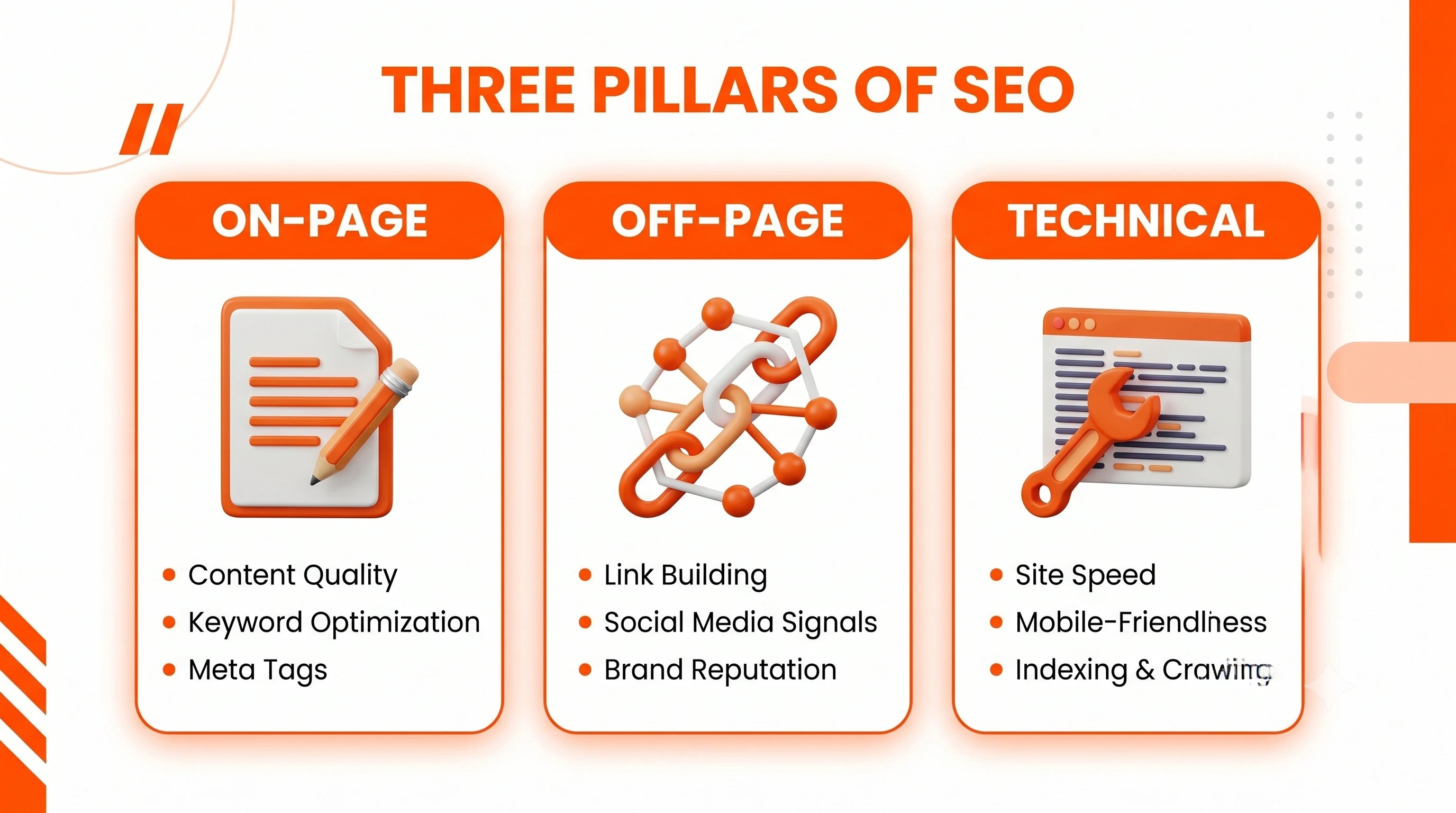
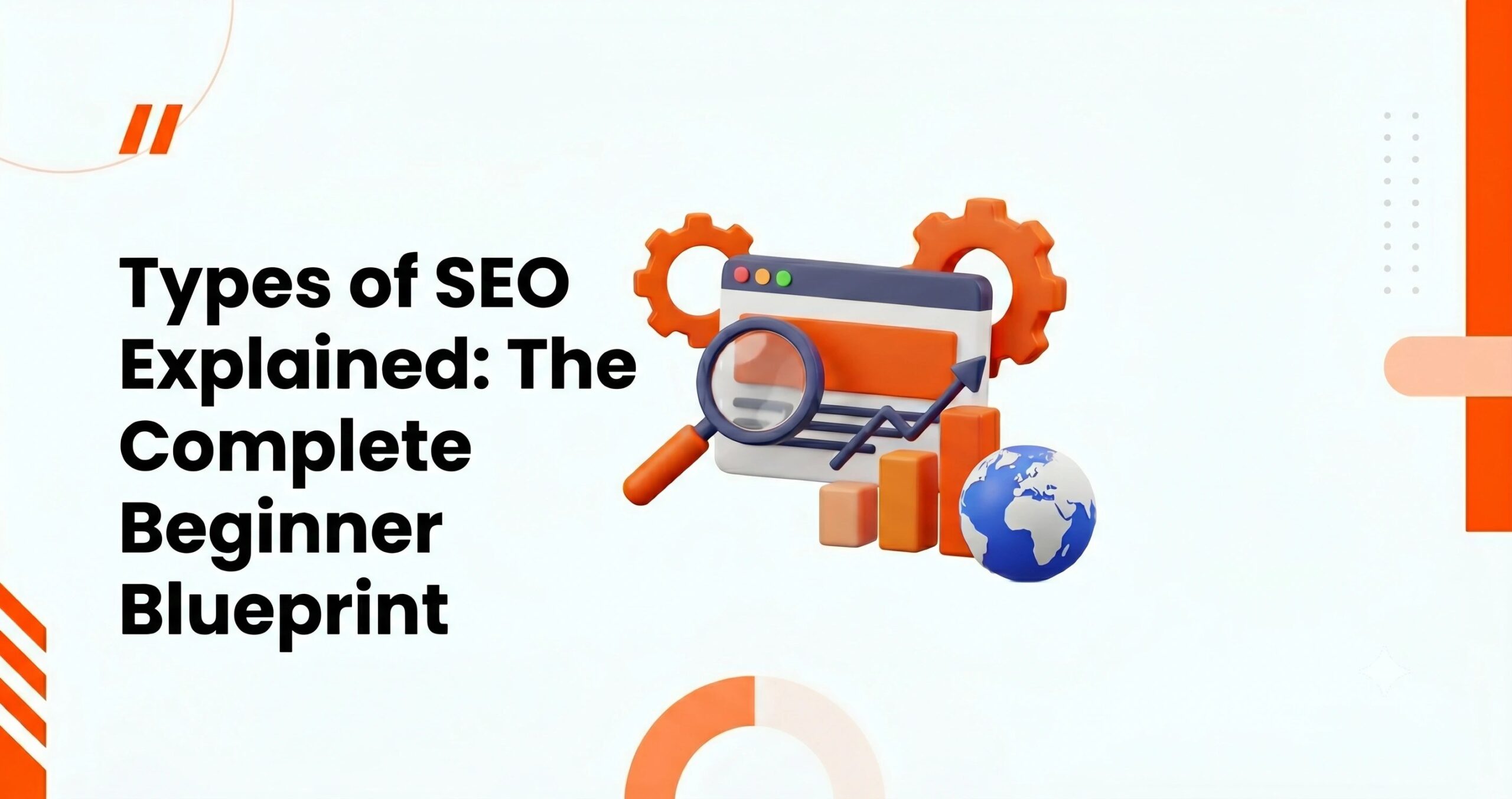
When exploring search engine optimization, it helps to understand that Google looks at your website from multiple angles to decide if you deserve a spot on the first page. While there are many sub-categories, the three foundational pillars are On-Page SEO, Off-Page SEO, and Technical SEO. Alongside these, specialized branches like Local SEO, E-commerce SEO, and International SEO help businesses target specific audiences.
To put it simply, different types of seo address different parts of your digital presence. Technical SEO makes sure Google can access your site, On-Page SEO ensures your content answers the user’s question, and Off-Page SEO proves to Google that your site is trusted and authoritative.
Every single one of these seo categories plays a specific role in improving your search engine visibility and growing your organic traffic over time.
On-Page SEO (Optimizing Your Content)
On-page SEO is the practice of optimizing individual pages on your website to rank higher and earn more relevant traffic. This is the area of search engine optimization where you have complete, 100% control over everything. Whenever you write an article or update a service page, you are actively performing on-page optimization.
Keyword Optimization
Keywords are the specific words and questions that real people type into a search engine. Before writing a single sentence, you must perform keyword research to find out what your audience is searching for.
For example, if you are a personal trainer with 200 Instagram followers, you want to find beginner-focused long-tail keywords like “how to start exercising at home” rather than competing for broad, impossible terms like “fitness.” Once found, weave these phrases into your content naturally without keyword stuffing, which harms your readability and rankings.
Content Quality
Google’s main goal is to provide the best possible answer to the user’s search intent. High-quality content means your page is deeply helpful, simple to read, and thoroughly solves a reader’s problem. Use short paragraphs of 2-4 lines max, use clear headers, and avoid corporate jargon completely so your text feels like teaching a close friend.
Title Tags
Your title tag is the main line of text that people see on a Google results page. Because you are using a free WordPress plan, your post title automatically becomes your SEO title and H1 heading. Make sure your primary keyword is placed right at the beginning of your title to grab the attention of both human readers and search bots.
Meta Descriptions
A meta description is the short snippet of text that appears beneath your title tag on Google. You can write this inside the WordPress Excerpt field. Keep this text under 155 characters, include your secondary keyword, and make it sound like a compelling invitation that makes searchers want to click through to your website.
Internal Linking
Internal links are hyperlinks that connect one page on your website to another page on the same site. This is a vital piece of on-page optimization. Connecting your content helps search engine bots crawl your site faster, and it passes website authority from your popular pages down to your newer posts.
| On-Page SEO Element | Action Step for Beginners |
| Title Tag / H1 | Place your primary focus keyword at the very beginning. |
| Content Structure | Use short paragraphs and clear H2/H3 subheadings. |
| Meta Description | Write a 155-character summary inside the WordPress excerpt field. |
| Internal Links | Use descriptive keyword anchor text instead of “click here.” |
Off-Page SEO (Building External Authority)
While on-page optimization happens inside your website, off-page SEO focuses on actions taken outside of your own site. Think of off-page optimization as building a stellar reputation across the wider web, so Google views your brand as trusted and credible.
Backlinks
A backlink is a hyperlink from an external website that points back to your page. In the eyes of search engine algorithms, every high-quality backlink acts like a digital vote of confidence. Earning a link from a massive, trusted authority site tells Google that your content is valuable, which significantly boosts your organic search traffic and search rankings.
Brand Mentions
A brand mention occurs when another website talks about your brand online, even if they do not include a direct clickable hyperlink. As your personal brand grows and more creators mention your name or blog on platforms like LinkedIn, search engines notice these signals and increase your overall search visibility.
Guest Posting
Guest posting is the process of writing a free article for an established website or blog in your niche. In exchange for your high-quality content, the host site will typically allow you to include a link back to your own website. This is a fantastic, white hat way for complete beginners to get discovered and build early authority.
Digital PR
Digital PR involves reaching out to online journalists, podcasters, and industry publications to get your business featured in online news stories or interviews. If a freelance graphic designer gets featured in a digital design magazine, it sends incredibly strong trust signals to Google, elevating the site’s competitive website optimization.
Technical SEO (Under the Hood Optimization)
Technical SEO involves optimizing the technical infrastructure of your website so search engine bots can easily crawl, interpret, and index your pages. If your site has severe technical issues, search engines will fail to display your content, no matter how great your blog posts are.
Website Speed
In our fast-paced digital world, website performance is critical. If your page takes longer than three seconds to load, a massive portion of your organic traffic will hit the back button. To keep your site lightning fast on your free WordPress plan, always compress your images to a smaller file size before uploading them.
Mobile Friendliness
More than half of all global web traffic comes from mobile devices like smartphones. Google uses mobile-first indexing, meaning it judges your entire site based on how well it functions on a small screen. Using a fully responsive modern theme like Twenty Twenty-Five ensures your site automatically adapts beautifully to any screen.
XML Sitemap
An XML sitemap is a simple blueprint file that lists all the important pages on your website. This map helps search engine bots discover, crawl, and understand your content structure easily. On a free WordPress setup, this file is automatically generated behind the scenes for you.
👉 Your live reference sitemap can be found at:
https://marketingwitharavind.com/sitemap.xml
Robots.txt
A robots.txt file is a set of instructions aimed directly at search engine crawlers. It tells the automated bots exactly which pages they are allowed to visit and crawl, and which parts of your site they should ignore (like your backend login pages), saving your site’s crawl budget.
Indexing
Indexing is the process by which Google takes the pages it has crawled and stores them in a massive digital database. If a page is not indexed, it cannot appear in organic search results. You should verify your blog inside Google Search Console so you can manually track your indexation status and fix crawl errors instantly.
Local SEO (Targeting Proximity Searches)
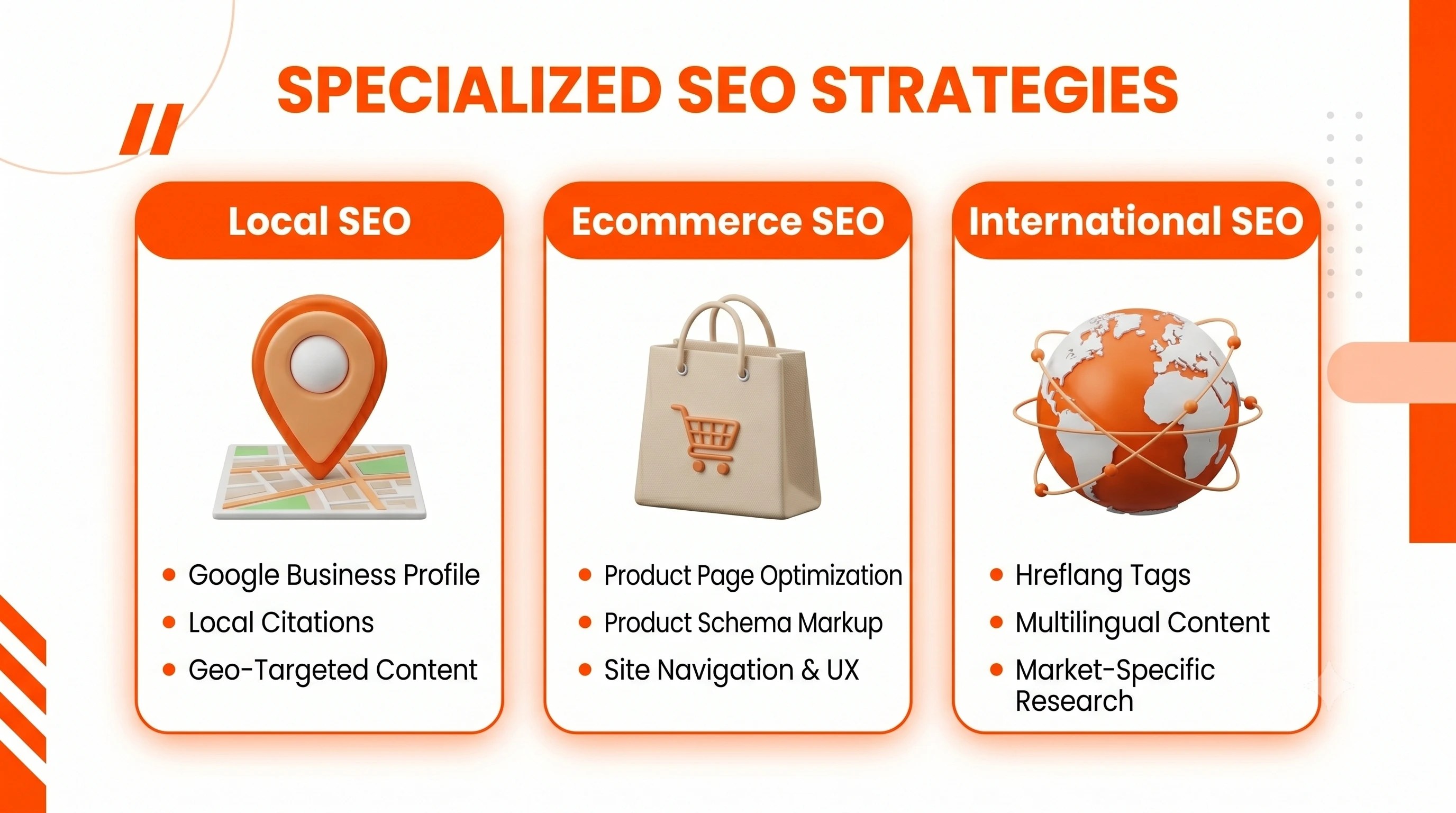
Local SEO is a highly specialized branch of search engine optimization designed to help physical, brick-and-mortar businesses or local service providers attract customers in a specific town, neighborhood, or city.
Google Business Profile
Your Google Business Profile is a free listing that allows your business to appear in local map packs and proximity-based searches. When someone nearby searches for a service, this profile displays your hours, location, and phone number, making it the most critical element of local website optimization.
Local Citations
A local citation is any online mention of your business name, physical address, and phone number across online directories like Yelp or YellowPages. To win at local search rankings, you must ensure that your business details are 100% identical and consistent across every directory on the web.
Reviews
Online customer reviews are a massive ranking factor for local search engine visibility. Google wants to recommend the best local businesses to its users. Actively encouraging your happy clients to leave positive, honest star ratings on your profile builds instant trust and pushes you higher in local map results.
Local Keywords
Optimizing for local keywords means targeting phrases that include specific geographic locations. For instance, instead of trying to rank for a broad phrase like “freelance logo designer,” a creator would target specific variations like “logo designer in Coimbatore” to capture high-intent buyers looking for local expertise.
E-commerce SEO (Optimizing Online Stores)
E-commerce SEO is the process of optimizing an online store to drive organic search traffic and product sales. Instead of writing informational articles, an e-commerce marketer focuses on capturing transactional search intent from buyers who are ready to purchase immediately.
Product Page Optimization
Product pages must be meticulously optimized. This involves writing deep, unique product descriptions that naturally include target keywords, using high-resolution images with clear descriptive alt text, and ensuring the checkout path is seamless for the shopper.
Category Pages
Category pages group similar products together, such as “Handmade Leather Wallets” or “Minimalist Phone Cases.” These pages are incredibly important because they often rank for broader, high-volume search terms, driving interested shoppers deeper into your online store.
Product Schema
Product schema markup is a specific technical code snippet that helps search engines understand product details. When implemented, it allows Google to display “rich snippets” directly on the search results page, showing your product’s price, stock availability, and star ratings right inside the SERP rankings.
International SEO (Reaching Global Markets)
If your digital products, freelance services, or blog content target users across multiple countries or language barriers, you must utilize international SEO. This specialized branch uses specific backend technical signals—like implementing hreflang tags—to tell search engines exactly which language or geographic region a specific page is designed for.
It also involves choosing a clear URL structure, such as using subdirectories (like yoursite.com/uk/ for United Kingdom readers), so that your international audience automatically sees local pricing, cultural examples, and regional spellings tailored perfectly to their location.
How All Types of SEO Work Together
The different types of seo do not exist in separate vacuum bubbles. Instead, they function like instruments in a finely tuned musical orchestra. If the violin section (Technical SEO) is completely out of tune, it will ruin the entire performance, no matter how beautifully the flute section (On-Page SEO) plays.
Let us look at a real-world scenario to see this harmony in action. Imagine a freelance graphic designer launches a brand-new website:
- Technical SEO Baseline: First, they establish their technical baseline by utilizing a clean theme and verifying their site in Google Search Console to guarantee bots can crawl their pages easily.
- On-Page SEO Content: Next, they write an incredibly helpful guide titled “How to Choose the Right Brand Colors for Your Small Business,” placing keywords naturally in the headings and title tags.
- Off-Page SEO Promotion: Once published, they share their expert insights on LinkedIn and secure a high-quality backlink from a trusted design blog that references their article.
Because the site is fast and accessible (Technical), the content is deeply relevant (On-Page), and external sources vouch for its credibility (Off-Page), Google rewards the site with prime rankings. The channels work in unison to bring consistent organic search traffic to the business.
Which Type of SEO Should Beginners Focus On?
As a complete beginner blogger or a service provider starting with a fresh digital presence, you cannot master every single specialized branch of marketing at the same time. If you try to learn international code setups, local citations, and complex product schema all at once, you will quickly experience burnout.
Your clear priority roadmap should look like this:
- Step 1: Secure Your Technical Baseline: Verify your site inside Google Search Console immediately so you can track how Google interacts with your pages.
- Step 2: Master On-Page Content: Spend 80% of your early energy here. Focus on deep keyword research and creating the most helpful, easy-to-read articles in your niche.
- Step 3: Build Deeper Internal Connections: As you write more content, strategically connect your pages using natural, keyword-rich anchor text inside your text.
- Step 4: Grow Off-Page Authority: Once you have a library of amazing content, step outside your site to share your work on social platforms, network on LinkedIn, and earn backlinks naturally.
Common SEO Mistakes to Avoid
The journey to sustainable search rankings is filled with common pitfalls. Avoid these major mistakes to keep your website completely safe from algorithm penalties:
- Keyword Stuffing: Forcing your primary focus keyword into your body copy as many times as possible looks incredibly unnatural to human readers and will get your site flagged by Google.
- Buying Backlinks: Purchasing cheap backlink packages from sketchy online marketplaces will permanently damage your website’s authority. Stick to earning links naturally.
- Ignoring Mobile Users: If your site text is too small or the layout buttons are cramped on mobile devices, your rankings will tank due to mobile-first indexing.
- Using Generic Anchor Text: Avoid using generic phrases like “click here” or “read more” for your links. Always use descriptive keywords to explain where the link goes.
Final Thoughts
Search engine optimization is not an overnight race; it is a long-term business strategy focused on consistency. By breaking down the process into clear seo categories—On-Page, Off-Page, and Technical- you can easily take control of your digital growth step-by-step.
Focus on delivering genuine value to your human readers, keep your technical foundation clear, and your organic search traffic will steadily climb.