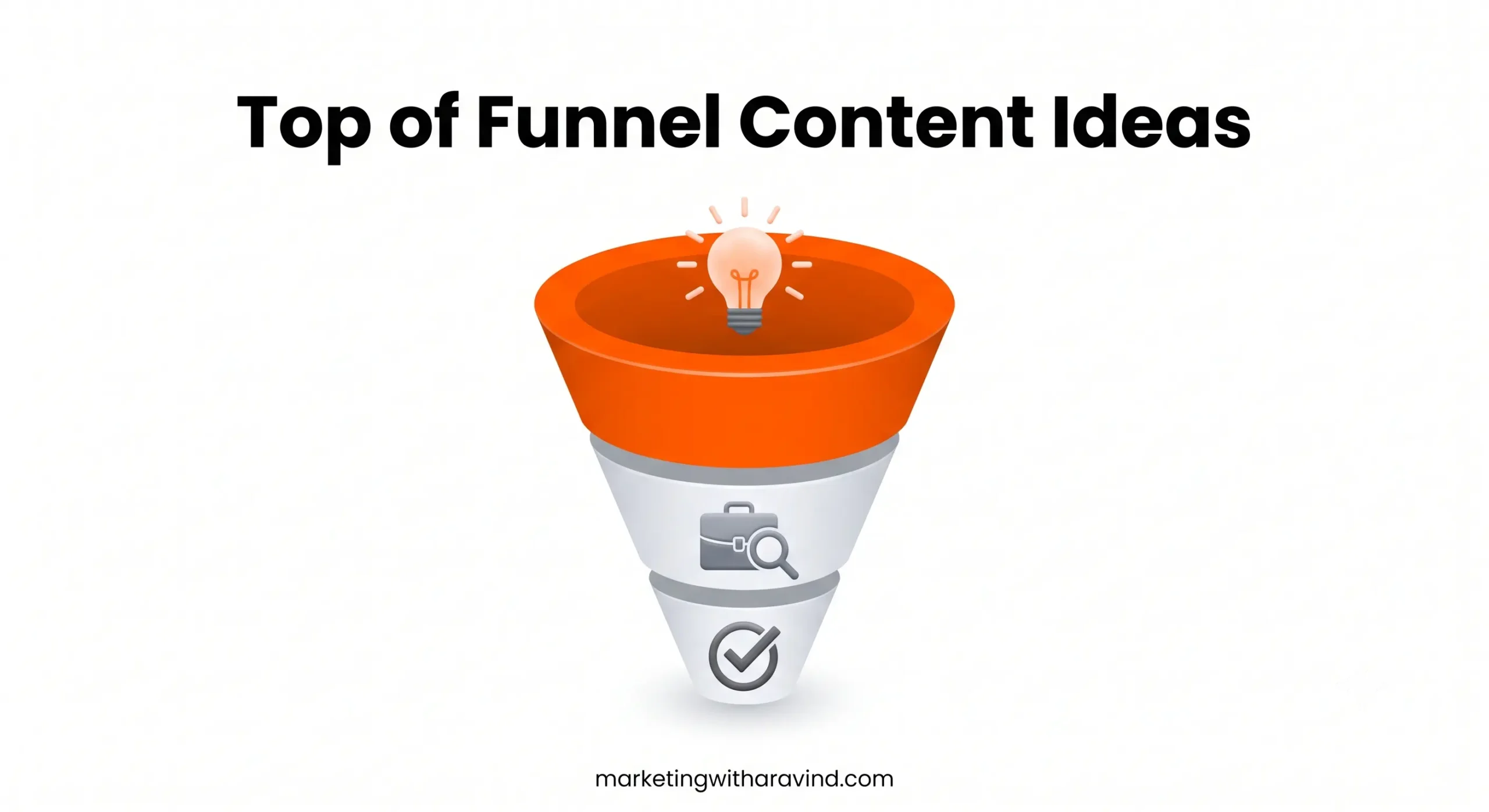
What is Top of Funnel Content (TOFU)?
Understanding the Basics
Top of funnel content (TOFU) is the type of content you create to attract people who are just beginning their journey with you. These are strangers who don’t yet know your brand, your products, or even if they have a problem you can solve.
Think of it like this: Imagine you’re running a tea shop. A person walking by doesn’t know you exist yet. A billboard that says “Best Chai in Town” doesn’t ask them to buy immediately. It just creates awareness.
That’s TOFU content in digital marketing.
TOFU content is designed for the awareness stage of the customer journey. The goal isn’t to sell – it’s to:
- Build awareness about a problem your audience faces
- Educate them on possible solutions
- Establish yourself as a helpful resource
- Create trust before they ever consider buying
The Psychology Behind TOFU Content
Here’s something most marketers don’t talk about: people don’t trust what they don’t know.
When someone discovers your brand for the first time, they’re skeptical. They have questions:
- “Who are these people?”
- “Can I trust them?”
- “Do they actually know what they’re talking about?”
Top of funnel content answers these questions without being pushy. It says, “Hey, I understand your problem. Let me help you understand it better.”
This builds psychological trust – the foundation of any customer relationship.
2. Why TOFU Content Matters for Your Business
The Hidden Revenue Engine
Here’s a statistic that changed my perspective: According to HubSpot, 73% of leads are not sales-qualified when they first come to you.
This means most people aren’t ready to buy yet. But they might be in 6 months. Or a year. Or 2 years.
If you only create content for people ready to buy right now, you’re ignoring 73% of your potential customers.
This is why top of funnel content strategy is the hidden revenue engine for long-term businesses.
The Long-Term Business Builder
When you create consistent TOFU content:
Month 1-3: You build an audience of interested people
Month 4-8: They learn to trust you
Month 9-12: They become ready to buy
Year 2+: They become your best customers and referrers
Successful businesses don’t think in months – they think in years. And TOFU content is the foundation.
Real Business Impact
Let me give you real numbers:
- Businesses with strong TOFU strategies see 50% more leads compared to their competitors
- TOFU content gets 3x more visibility on social media (people share educational content more)
- Top of funnel audiences have 30% higher lifetime value (because they trust you more)
This isn’t theory. This is proven business strategy.
3. Search Intent: Understanding Your Audience’s Mind
Before we dive into content ideas, you need to understand something critical: search intent.
When someone searches for “top of funnel content ideas,” they’re not looking to buy anything. They’re looking to:
- Understand what TOFU content is
- Learn practical examples
- Discover how to create it
- Find inspiration for their own content
This is informational + practical search intent.
Understanding this is important because it shapes everything you create. Your audience doesn’t want a sales pitch – they want education with practical takeaways.
4. 25 Proven Top of Funnel Content Ideas
Now we get to the fun part. Here are 25 content ideas for top of funnel that actually work:
Educational Content Ideas (TOFU Content Ideas for Learning)
1. How-To Guides
- Example: “How to Create a Social Media Strategy in 5 Steps”
- Why it works: People search these constantly. It’s evergreen. It builds trust.
2. Beginner’s Guides
- Example: “Digital Marketing for Beginners: Complete 2026 Guide”
- Why it works: Beginners are always searching. This positions you as a teacher.
3. Explainer Videos
- Example: “What is SEO? (Explained in 5 Minutes)”
- Why it works: Video is the most engaging format. People prefer learning visually.
4. Infographics
- Example: “The Customer Journey: 5 Stages Explained”
- Why it works: Visually digestible information gets shared 3x more than text.
5. Concept Articles
- Example: “What is Content Marketing? (Complete Breakdown)”
- Why it works: People want to understand basic concepts. This content ranks for high-volume keywords.
Inspiration & Ideas Content
6. Lists & Roundups
- Example: “50 Content Ideas for Your Digital Marketing Blog”
- Why it works: Lists are clickable, shareable, and great for SEO.
7. Case Studies (General)
- Example: “How Small Businesses Used Content Marketing to 10x Revenue”
- Why it works: Stories inspire. People want to see real results.
8. Trend Reports
- Example: “Digital Marketing Trends for 2026: What’s Working Now”
- Why it works: People follow trends. This content gets shared extensively.
9. Example Collections
- Example: “7 Best Top of Funnel Content Examples (From Real Brands)”
- Why it works: Real examples make concepts concrete and actionable.
10. Templates & Checklists
- Example: “Content Calendar Template: Plan Your Content Like a Pro”
- Why it works: Downloadable resources capture emails and build your list.
Research & Data-Driven Content
11. Industry Reports
- Example: “Digital Marketing Salary Report: 2026 Edition”
- Why it works: Data-driven content ranks well and attracts serious audience members.
12. Survey Results
- Example: “We Surveyed 5,000 Marketers: Here’s What They’re Struggling With”
- Why it works: Original research is highly shareable and builds authority.
13. Comparison Articles
- Example: “TOFU vs MOFU vs BOFU: Complete Breakdown with Examples”
- Why it works: People research before deciding. Comparison content converts browsers to learners.
14. Tools & Software Reviews
- Example: “Best Content Marketing Tools for Beginners“
- Why it works: People actively seek tool recommendations. This builds affiliate income too.
15. Resource Lists
- Example: “25 Free Digital Marketing Resources Every Beginner Needs”
- Why it works: Curated resources become go-to references. People bookmark and share these.
Problem-Solving Content
16. FAQ Articles
- Example: “Top 20 Digital Marketing Questions Beginners Ask (Answered)”
- Why it works: Matches natural search queries. Addresses specific pain points.
17. Myth-Busting Articles
- Example: “5 Digital Marketing Myths That Are Costing You Money”
- Why it works: Contrarian content gets attention. People share when surprised.
18. Challenge/Problem Solutions
- Example: “Why Your Content Marketing Isn’t Working (And How to Fix It)”
- Why it works: Diagnoses problems people face. Offers hope and solutions.
19. Common Mistakes Series
- Example: “7 Content Marketing Mistakes Beginners Make (And How to Avoid Them)”
- Why it works: Helpful negative examples help people learn faster.
20. Troubleshooting Guides
- Example: “Why Your Blog Posts Aren’t Getting Traffic: 10 Reasons + Fixes”
- Why it works: Solves immediate problems. Builds trust through usefulness.
Interactive & Entertainment Content
21. Polls & Surveys
- Example: “What’s Your Biggest Digital Marketing Challenge? Vote Now”
- Why it works: Engagement is the new currency. Creates community.
22. Webinars & Live Sessions
- Example: “Live Q&A: Your Digital Marketing Questions Answered”
- Why it works: Real-time interaction builds stronger connections.
23. Quizzes
- Example: “What’s Your Content Marketing Maturity Level? Take the Quiz”
- Why it works: Interactive, shareable, and captures leads naturally.
24. Behind-the-Scenes Content
- Example: “A Day in My Life as a Digital Marketer”
- Why it works: Humanizes your brand. People connect with people, not companies.
25. Interviews & Expert Roundups
- Example: “15 Digital Marketing Experts Share Their #1 Content Tips”
- Why it works: New perspective. Leverage expert audiences. Highly shareable.
5. How to Create TOFU Content That Actually Ranks
Creating content that ranks on Google isn’t magic. It’s a system.
The TOFU Content Creation Framework
Step 1: Research Keywords (Your Foundation)
Before you write a single word, research keywords. Look for:
- High search volume (1,000+ monthly searches)
- Low difficulty (achievable for new sites)
- Clear intent (people actually want this answer)
Use tools like Rank Math (which you already have installed) to analyze search intent.
Step 2: Understand Search Intent (The Hidden Multiplier)
The difference between ranking and not ranking often comes down to understanding what your audience actually wants.
When someone searches “best top of funnel content ideas,” they want:
- Practical, actionable ideas (not theory)
- Real examples (not generic advice)
- Quick takeaways (they’re busy)
Your content structure should match these expectations.
Step 3: Create the Perfect Structure (SEO + Readability)
Here’s my proven structure for TOFU content:
Introduction (150-200 words)
↓
Hook + Problem Statement
↓
Concept Explanation
↓
Main Content (Ideas, Tips, Examples)
↓
How-To / Implementation
↓
Comparison / Why It Matters
↓
FAQ Section
↓
Conclusion + CTA
Step 4: Write for People First, Google Second
The #1 mistake: Writing for algorithms instead of people.
When you write TOFU content:
- Use short paragraphs (2-3 sentences max)
- Use storytelling (especially at the beginning)
- Use real examples (the more specific, the better)
- Use lists (people scan, don’t always read)
- Use subheadings liberally (every 150-200 words)
Google rewards content that people love. And people love readable, useful content.
Step 5: Optimize On-Page SEO (The Technical Part)
Make sure you include:
- Focus keyword in title (check)
- Focus keyword in first 100 words (check)
- 2% keyword density throughout (natural)
- Subheadings with related keywords
- Internal links (to your pillar content: “Content Marketing for Beginners“)
- External links (to authoritative sources)
- Alt text on images (important for accessibility + SEO)
Step 6: Schema & Meta Tags (Often Missed)
Use Rank Math to add:
- FAQ Schema (for your FAQ section)
- Article Schema
- Meta description (under 160 characters)
- Open Graph image
This isn’t optional for ranking – it’s mandatory.
6. TOFU vs MOFU vs BOFU: Key Differences Explained
Many people get confused here. Let me clarify:
The Complete Funnel Breakdown
TOFU Content (Top of Funnel) – Awareness Stage
- Purpose: Build awareness about a problem/topic
- Audience: Strangers who don’t know you
- Content Type: How-to, guides, lists, educational videos
- Example: “What is Digital Marketing?”
- Goal: Attract visitors, build audience
MOFU Content (Middle of Funnel) – Consideration Stage
- Purpose: Help prospects evaluate solutions
- Audience: People who know they have a problem
- Content Type: Comparisons, case studies, webinars
- Example: “Rank Math vs Semrush: Which SEO Tool is Better?”
- Goal: Build consideration, capture leads
BOFU Content (Bottom of Funnel) – Decision Stage
- Purpose: Close the sale
- Audience: Ready-to-buy prospects
- Content Type: Product demos, pricing guides, testimonials
- Example: “Why We Chose Rank Math for Our Agency”
- Goal: Conversion, sales
Why This Matters
Most beginners only create BOFU content (“Buy now!”). But they should be creating 70% TOFU, 20% MOFU, 10% BOFU.
This is the top of funnel content strategy that wins long-term.
7. Top of Funnel Content Examples That Work
Let me give you specific examples you can model:
Example 1: Educational TOFU Content
Article: “Content Marketing for Beginners: The Complete 2026 Guide”
- Format: Comprehensive guide
- Length: 5,000+ words
- Keyword: “content marketing for beginners”
- Why it works: Beginners search this constantly. Comprehensive = higher authority
Example 2: Listicle TOFU Content
Article: “50 Content Ideas for Digital Marketing (With Examples)”
- Format: Numbered list with explanations
- Length: 3,000-4,000 words
- Keyword: “content ideas for digital marketing”
- Why it works: Lists are scannable. High engagement. Easy to add more ideas.
Example 3: Video TOFU Content
Video: “How to Create Your First Blog Post (Step-by-Step Tutorial)”
- Format: Screen recording + voice-over
- Length: 8-12 minutes
- Topic: Step-by-step tutorial
- Why it works: Video is the most consumed format. Position as expert teacher.
Example 4: Infographic TOFU Content
Graphic: “The Digital Marketing Funnel Explained (Visual Breakdown)”
- Format: Infographic with explanations
- Size: Vertical, Pinterest-optimized
- Key takeaway: Visual of TOFU → MOFU → BOFU stages
- Why it works: Highly shareable. Repurposed content (blog → Pinterest → social)
Example 5: Data-Driven TOFU Content
Article: “We Analyzed 1,000 Blog Posts. Here’s What Ranks Best (2026)”
- Format: Research article with findings
- Length: 4,000+ words
- Unique angle: Original research
- Why it works: Creates authority. Attracts high-quality links.
8. Measuring Your TOFU Content Performance
Creating content without measuring it is like driving blind. Here’s what to track:
Key Metrics to Monitor
Organic Traffic
- Track in Google Analytics
- Goal: 30-50% month-over-month growth for new TOFU content
- What it means: Your content is being found
Engagement Rate
- Time on page (aim for 2+ minutes)
- Scroll depth (aim for 75%+)
- Bounce rate (aim for under 40%)
- What it means: People find your content valuable
Conversion Rate
- Email newsletter signups
- Free resource downloads
- CTA clicks
- What it means: TOFU content successfully moves people closer to your brand
Keyword Rankings
- Track in Rank Math
- Goal: Top 30, then top 10, then top 3
- Timeline: 3-6 months for new sites
- What it means: Your SEO strategy is working
Social Shares
- Track shares across platforms
- Goal: 5+ shares per piece minimum
- What it means: Content resonates beyond Google
The Ideal TOFU Content Scorecard
Track these metrics for each piece:
- Month 1: 500+ impressions
- Month 2-3: 1,000+ impressions
- Month 3-6: 2,000+ impressions
- Month 6+: 5,000+ impressions (once ranking in top 10)
9. Quick Checklist: Publishing TOFU Content
Before you publish any top of funnel content, run through this:
Pre-Publishing Checklist
✅ Keyword Research Done
- Primary keyword identified
- Search intent understood
- Competing content analyzed
✅ Content Structure Complete
- Outline approved
- Subheadings optimized
- Examples included
✅ First 100 Words Perfect
- Hook is compelling
- Problem stated
- Promise of solution given
✅ Internal Linking Done
- Link to pillar content: “Content Marketing for Beginners”
- Link to 3-5 related articles
- Anchor text is descriptive (not “click here”)
✅ External Links Added
- At least 5-7 external links
- Links to authoritative sources only
- Open in new tab
✅ Images Optimized
- 3-5 images minimum
- Alt text written (includes keyword naturally)
- File names optimized (not “image123.jpg”)
- File size under 100KB (compressed)
✅ Meta Tags Complete
- Meta title (under 60 characters)
- Meta description (under 160 characters)
- Focus keyword in both
✅ Schema Added
- Article schema
- FAQ schema (if applicable)
- Author schema
✅ Social Media Previews
- Open Graph image added
- Twitter card optimized
- Compelling preview text
✅ Final Review
- Proof-read for typos
- Check for readability
- Verify all links work
- Mobile preview checked
10. FAQ: Top of Funnel Content Questions
What is top of funnel content?
Top of funnel content is the type of content you create to attract strangers who don’t yet know your brand. It’s designed for the awareness stage of the customer journey and focuses on education, solving problems, and building trust – not making immediate sales.
What are some top of funnel content ideas?
The best top of funnel content ideas include:
- How-to guides and tutorials
- Educational blog posts and beginner’s guides
- Listicles (50 ideas, 25 tips, etc.)
- Explainer videos
- Infographics
- Myth-busting articles
- FAQ and Q&A content
- Industry trend reports
- Comparison articles (TOFU vs MOFU vs BOFU)
- Interviews and expert roundups
What is TOFU content in marketing?
TOFU content stands for “Top of Funnel” content. It’s marketing content designed for people at the beginning of their customer journey – those who are just becoming aware of a problem or your industry. The goal is awareness and trust-building, not immediate sales.
What content is best for the top of the funnel?
The best top of funnel content tends to be:
- Educational (people want to learn)
- Practical (people want actionable advice)
- Original (people want fresh perspectives)
- Well-structured (people want easy-to-scan information)
- Engaging (people want to connect with your personality)
What should I post at the top of the funnel?
At the top of the funnel, post content that:
- Raises awareness about a problem
- Educates about possible solutions
- Builds trust in your expertise
- Entertains or inspires your audience
- Doesn’t sell, but creates curiosity
How do you create top of funnel content?
To create effective top of funnel content:
- Research keywords with clear intent
- Understand what your audience actually wants
- Create a compelling outline
- Write for readability first, SEO second
- Include examples, stories, and data
- Optimize for on-page SEO
- Add internal links to related content
- Promote across social media
What is an example of top of funnel content?
Great examples of top of funnel content include:
- A blog post titled “Content Marketing for Beginners: Complete 2026 Guide”
- A YouTube video: “How to Start a Blog in 10 Minutes”
- An infographic showing “The Customer Journey Explained”
- An article: “25 Content Ideas for Digital Marketing”
- A webinar: “Introduction to SEO Fundamentals”
How do you measure top of funnel content?
Measure top of funnel content using:
- Organic traffic (from Google)
- Engagement metrics (time on page, scroll depth)
- Conversion rate (email signups, downloads)
- Keyword rankings (are you ranking for your target keywords?)
- Social shares (how many people share your content?)
- Audience growth (email list, social followers)
Conclusion: Start Your TOFU Strategy Today
Here’s the truth nobody tells beginners: Overnight success takes 2 years.
But if you’re strategic? You can compress that timeline.
By creating consistent top of funnel content ideas that educate, inspire, and solve problems, you’re building the foundation of a sustainable business.
Remember:
- 95% of your audience isn’t ready to buy yet
- TOFU content attracts, educates, and builds trust
- Long-term businesses win by thinking in years, not months
- Consistency beats perfection every single time
The best time to start was yesterday. The second-best time is today.
Pick one top of funnel content idea from this list, create it this week, and watch what happens.
Need help understanding the complete digital marketing funnel? Check out our comprehensive guide to content marketing for beginners – it covers everything from TOFU to converting customers.
Ready to Build Your Content Strategy?
If you’re serious about building a beginner-focused digital marketing presence, I created a free digital marketing roadmap specifically for people like you.
It covers:
- How to create your first 25 pieces of TOFU content
- The exact framework for top of funnel content strategy
- A month-by-month content calendar
- How to repurpose this content across all platforms